
Liam's thumbs ghosted across the screen, each tap a note in an old, familiar symphony. It was 2026, and Apex Legends Mobile had long since shed its 'new kid' skin, settling into the digital palms of millions like a well-worn glove. The drop ship roared over Kings Canyon, and as he launched into the turbulence, the map unfolded beneath him like a circuit board of memories—each location a node crackling with the energy of a thousand past firefights. The game was not just a port; it had become a living archive, a pocket-sized legend hummed by commuters and esports hopefuls alike.
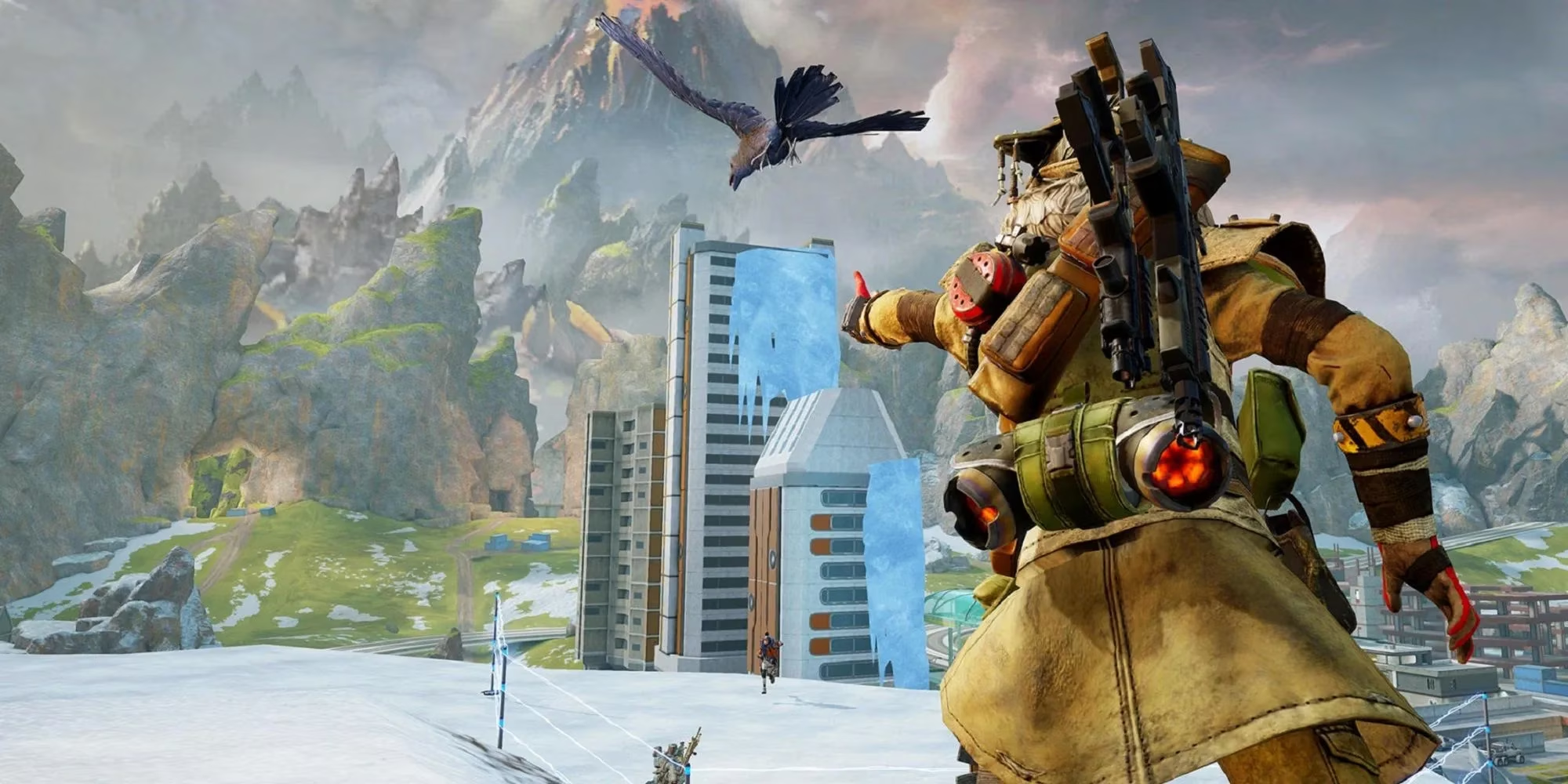
Respawn had shipped the mobile version back in 2022 with a promise: crisp, mobile-first optimizations that felt less like a compromise and more like a revelation. Four years later, those promises had hardened into a polished artifact. The controls were a river of silk beneath Liam's thumbs—intuitive enough that a casual slide into cover felt like second nature, yet layered with the depth of a customisable HUD that hardcore players had come to adore. Jordan Patz, the design director who had once whispered about "mobile exclusive content" in early previews, had delivered a garden of delights that now bloomed in every season.
That garden was rooted in an almost archaeological selection of Legends. Liam scrolled through the roster: Bloodhound, Gibraltar, Lifeline, Pathfinder, Wraith, Bangalore, Octane, Caustic, Mirage, and a tenth that had arrived in a later season. It was a lineup carved from the bedrock of Apex's original DNA. He picked Pathfinder, and the grapple fired not like a mechanical rope, but like a silver thought—swift, precise, and utterly instinctive. The friendly robot's voice line crackled as they swung toward Skull Town, that infamous ribcage of rusted metal and vertical chaos.
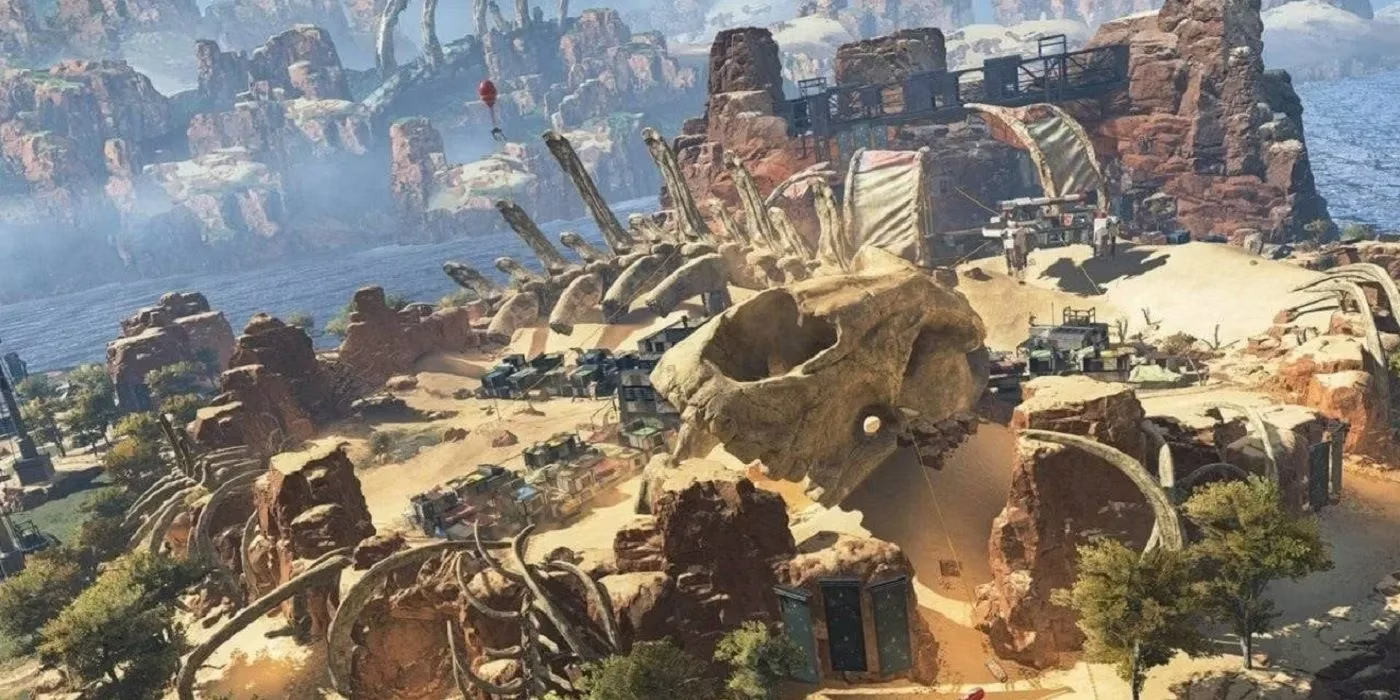
Yes, Skull Town. It had returned from the grave, a fossil of nostalgia resurrected in the mobile ecosystem. Along with the clanking train that circuited World's Edge, the map rotation was a love letter mailed not to Season 3 but to the very soul of the fanbase. For veterans like Liam, dropping into these locales felt like opening a time capsule sealed with gunpowder and care-package glitter. The terrain was a chessboard where every building and zip line knew its purpose, yet the mobile-exclusive twists—subtle map alterations, dynamic events—kept even the saltiest players guessing.
Beyond the core battle royale and ranked modes, Apex Legends Mobile had become a laboratory of "new ways to play." The phrase, once a cryptic teaser from Patz, now translated into a sprawling catalogue of exclusive limited-time modes and cooperative experiments. One week, you might be fending off waves of Prowlers in a PvE horde mode lifted straight from the Broken Ghost questline; the next, you were navigating a mirror-universe map where gravity behaved like a distracted painter, splashing low-gravity zones at random. There were whispers in the lobby of a custom lobby system that let clans duel in private, a feature the main game had only recently adopted. Liam and his squad had spent the previous evening in a new mode called "Relic Rush," a time-attack race through loot vaults that felt more like a heist film than a battle royale.
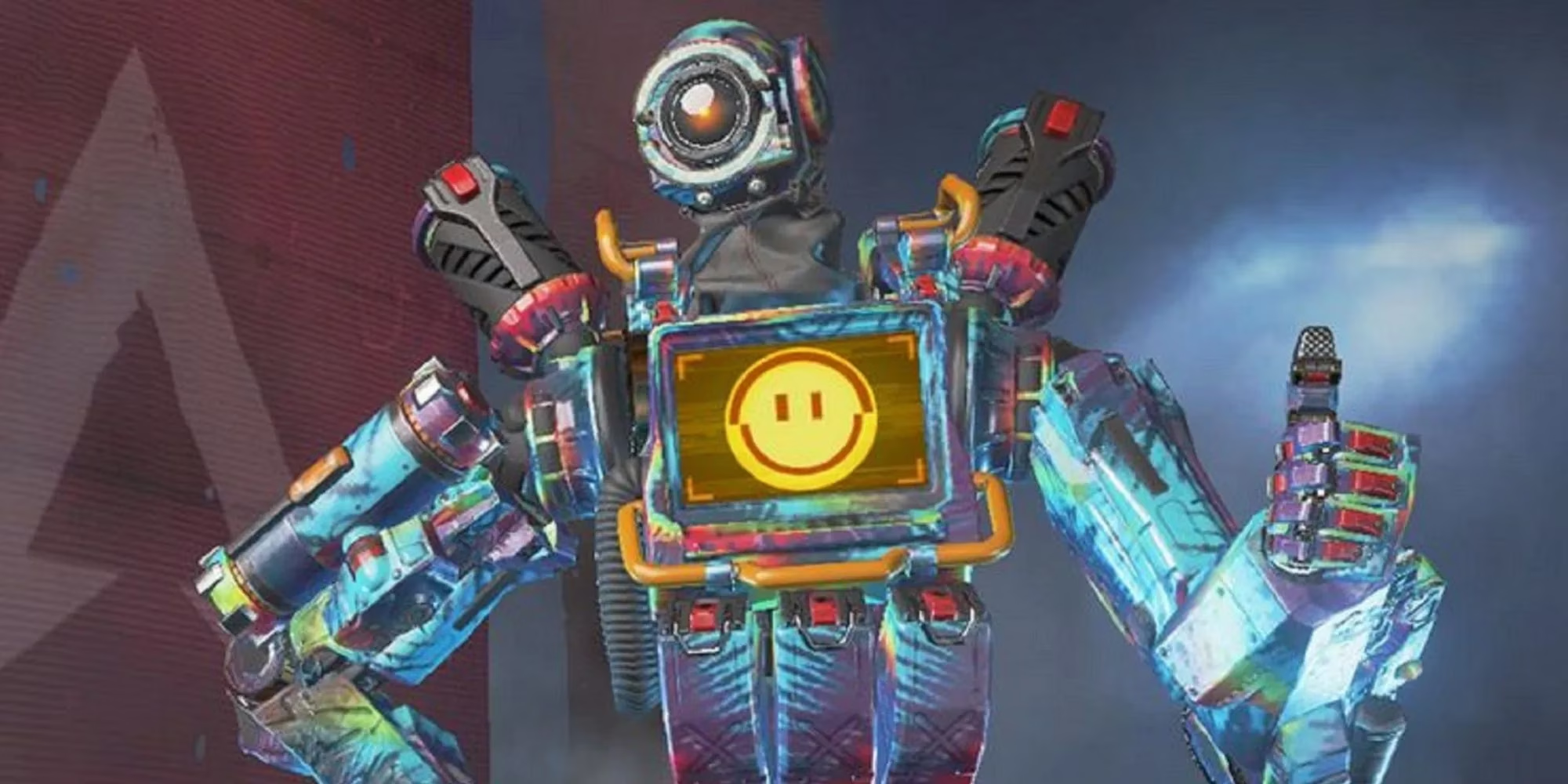
Monetisation, too, had evolved into something uniquely mobile. Loot boxes had been replaced by a layered battle pass system and a "Legacy Market" where players could trade cosmetic shards for items from past seasons—a far cry from the old Apex Pack slot machine. Liam admired his Pathfinder skin, a matte-black chassis with golden filigree that he had earned through sheer gameplay, not chance. It felt less like a purchase and more like a trophy, a tangible mark of time invested.
As the final circle closed in on a rooftop in Capitol City, Liam's squad executed a pincer maneuver so smooth it could have been choreographed. There was still a raw, unpredictable beauty to Apex Legends Mobile—a pocket universe that had grown alongside its player base, absorbing feedback like a living organism. The victory screen bloomed, and Liam allowed himself a small smile. In 2026, a whole generation of players had never known a world without this mobile arena, and for those who had been there since the global launch, it remained a faithful companion, a battle-scarred friend that fit neatly between a coffee and a commute.