
The Apex Legends Global Series (ALGS) has officially unveiled its ambitious plans for Year 3 of competition, setting the stage for a landmark 2026 season. Following a period of limited esports activity, the circuit returns with a renewed focus on international, in-person competition and structural innovations designed to elevate the entire ecosystem. With a total prize pool of $5 million and a schedule aiming for three major LAN events, the upcoming year promises to be the most robust and globally connected yet for the battle royale's competitive scene.
 .jpg)
.jpg)
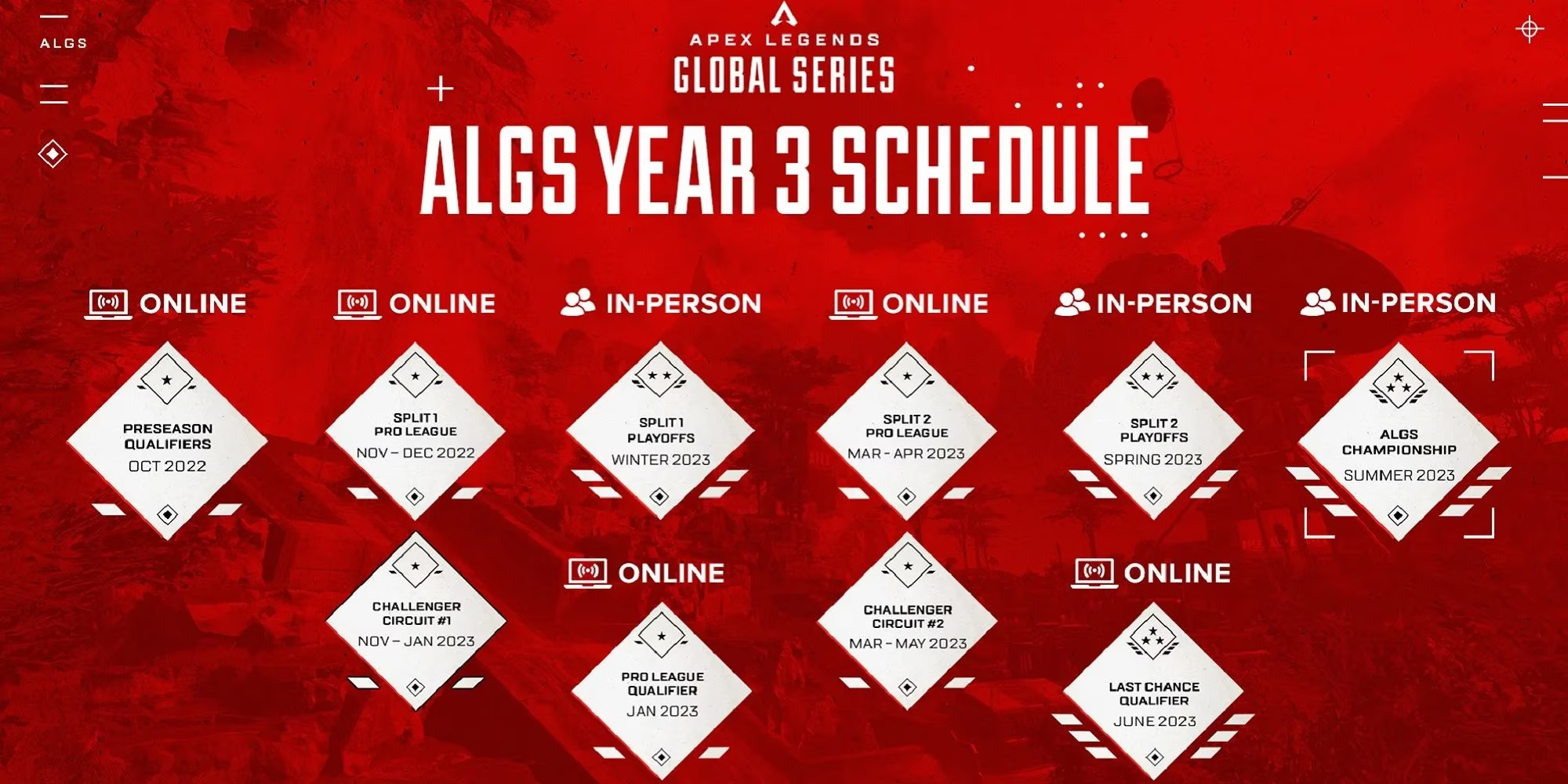
A central and highly anticipated pillar of the Year 3 strategy is the commitment to a full slate of LAN tournaments. While previous seasons were disrupted, the plan for 2026 is clear: host three international LAN competitions. The season is structured to build towards a grand finale, beginning with the Split 1 Playoffs in the winter, moving to the Split 2 Playoffs in the spring, and culminating in the prestigious Year 3 Championship in the summer of 2026. This represents a significant milestone, as it would be the first time the ALGS successfully executes its intended three-LAN schedule within a single competitive year, offering players and fans the consistent, high-stakes live events they have been awaiting.
The competitive journey for teams begins next month with the Preseason Qualifiers, leading into the Pro League which commences on November 6th. The league structure itself has seen adjustments to foster greater regional competition and opportunity.
Key Structural Changes for Year 3
One of the most significant format introductions for ALGS Year 3 is the Regional Finals. At the conclusion of each Split, the top 20 teams from each geographical region will compete in a special Match Point series. The winner of this intense regional showdown will be rewarded with a guaranteed spot in the upcoming Split Playoffs, adding a crucial new pathway for teams to qualify for international LANs and intensifying the narrative within each region.
Concurrently, the Pro League for each Split will feature a slightly more concentrated field of competitors. The ALGS has extended direct invitations to 22 teams per region, with the final eight spots in the 30-team league to be determined through the Preseason Qualifiers. This creates a dynamic mix of established squads and hungry challengers right from the start.
The ecosystem supporting professional and aspiring players is also expanding. The Challenger Circuit, a vital proving ground, now offers added incentives. The winning team from each Challenger Circuit tournament will earn automatic qualification into either the Split 2 Pro League Qualifier or the Last Chance Qualifier for the ALGS Championship. This creates a more tangible and rewarding ladder for teams climbing the competitive ranks, directly linking grassroots success to the highest levels of play.
Organizers have emphasized that Year 3 will introduce several "ecosystem enhancements" aimed at deepening engagement for both competitors and the global fanbase. While the Regional Finals are a concrete example, these enhancements suggest a holistic approach to growing the sport's footprint. Details on potential interactive viewing experiences, content initiatives, or community programs remain to be fully revealed, but the direction points towards a more immersive and connected ALGS experience for everyone involved.
As the 2026 season approaches, the framework is set for a year of high-stakes, global competition. The combination of a full LAN schedule, the new Regional Finals, and enhanced pathways through the Challenger Circuit establishes ALGS Year 3 as a pivotal chapter. Teams now prepare for the Preseason Qualifiers, the first step on the road to what promises to be an unforgettable championship summer.