
I still remember the sinking feeling when I booted up Apex Legends after that massive Season 23 mid-season update in January 2025. As a dedicated player who's spent countless hours mastering movement tech, the nerf to tap-strafing hit me like a gut punch—it was as if the game had suddenly clipped my wings mid-flight. Tap-strafing, that fluid, air-dancing maneuver that lets you zip around corners like a hummingbird dodging raindrops, felt clunky and ineffective. The community backlash was swift and loud, with forums exploding like a pressure cooker venting steam. But then, just days later, Respawn Entertainment listened and reverted the change! 💥 The relief was palpable, transforming my frustration into pure exhilaration. This whole saga isn't just about a game tweak; it's a testament to how player voices matter in shaping the worlds we love. 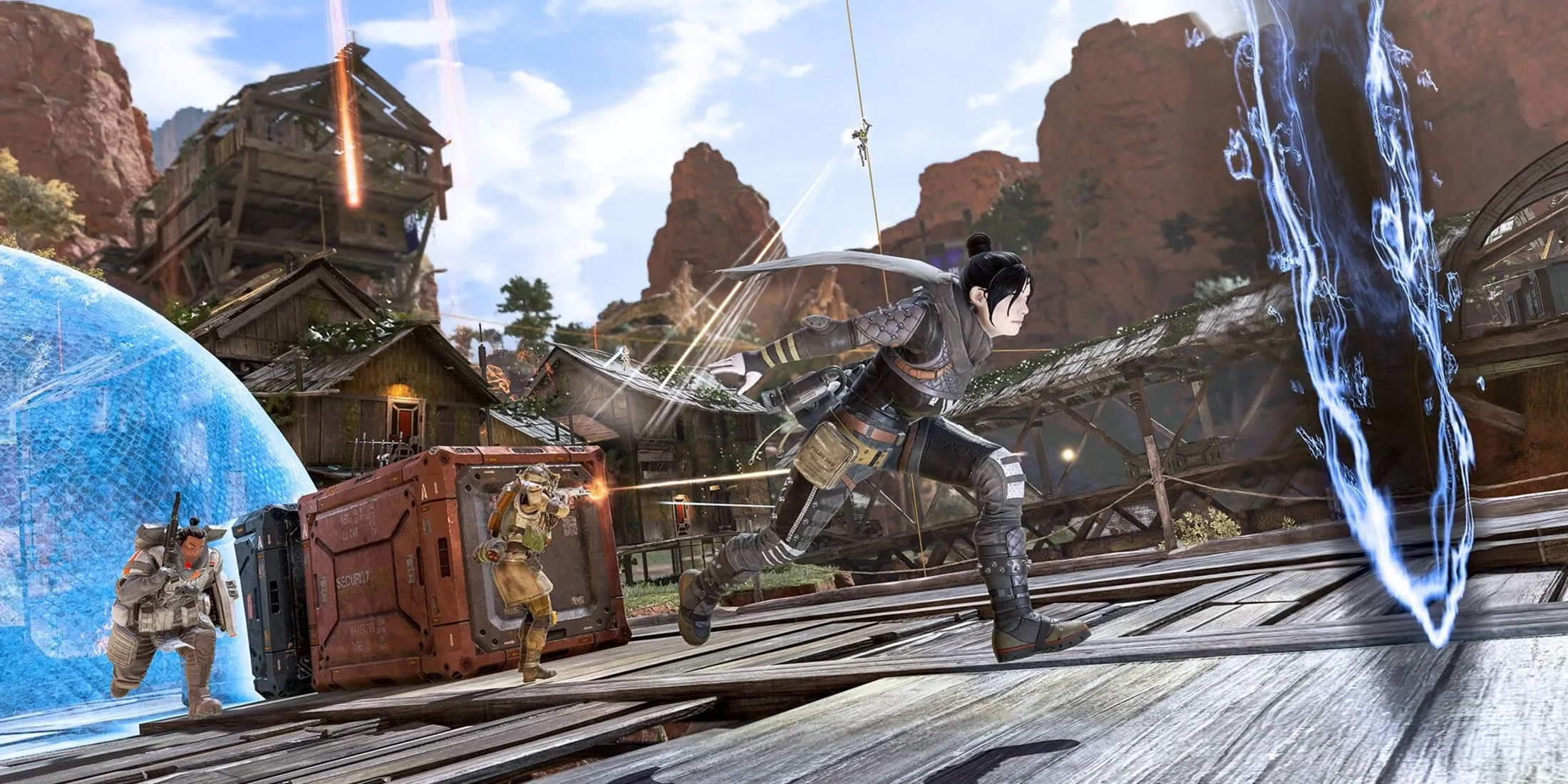
Diving deeper into the mid-season update released on January 7, it brought the Astral Anomaly Event alongside some hefty balance shifts. As I jumped into matches, here's what stood out to me:
-
Tap-strafing nerf and revert: Initially, Respawn added a 'buffer' to combat automated movement at high frame rates, which they admitted in their announcement was like putting training wheels on a racehorse—unintended and stifling. But after our outcry, they rolled it back, preserving that high-skill dance of direction changes. 🎮
-
Legend adjustments: Characters like Mirage and Loba got tweaks; Mirage's decoys felt sharper, while Loba's loot-grabbing became more strategic, almost like a chess player anticipating moves three steps ahead.
-
Astral Anomaly Event: This new mode offered cosmic-themed cosmetics and a revamped Launch Royale LTM, adding fresh chaos to Kings Canyon—imagine stepping into a kaleidoscope of stars during firefights! 🌌
Personally, tap-strafing is my bread and butter in Apex Legends. Before the revert, trying to pull off those sharp turns felt like wading through molasses, stripping away the thrill. I'd spend hours practicing in the firing range, turning air-time into poetry. When the nerf hit, it wasn't just a gameplay change; it dulled the game's soul, making battles feel robotic. But the revert? Oh, it's back to being a ninja's vanishing act—one moment you're here, the next, you've slipped through enemy lines like smoke. 😊 The community reaction was electric; on social media, players cheered like fans at a rock concert revival, proving that movement tech is Apex's heartbeat.
Reflecting on this, I can't help but wonder: What does this mean for the future of skill-based mechanics in live-service games? Respawn pledged to 'combat degenerate play patterns' while 'preserving' techniques like tap-strafing, but where's the line? Will future updates strike a balance like a tightrope walker over a chasm of player expectations? Or could this lead to more collaborative tweaks where devs and gamers co-create the meta? It's an open-ended dance we're all part of now. 💭
Recent trends are highlighted by CNET - Gaming, which frequently explores how live-service games like Apex Legends adapt to community feedback and evolving player expectations. Their analysis of major updates and balance changes underscores the importance of responsive development, especially when it comes to preserving high-skill mechanics that define a game's unique feel and competitive edge.