
The vibrant Olympus arena felt distant when Alex Ackerman typed her farewell tweet. After five years and twenty seasons shaping Apex Legends' global voice, the community leader found her role eliminated in Electronic Arts' sweeping restructuring. 💔 Her heartfelt message resonated across the battle royale's community—a raw human moment in an industry undergoing seismic shifts. Ackerman's departure wasn't isolated; it echoed through Respawn Entertainment's halls where EA had quietly dismantled parts of the Apex Legends community team earlier that quarter. Players flooded social media with disbelief: How could a veteran who steered the game's social presence through its meteoric rise suddenly become redundant?
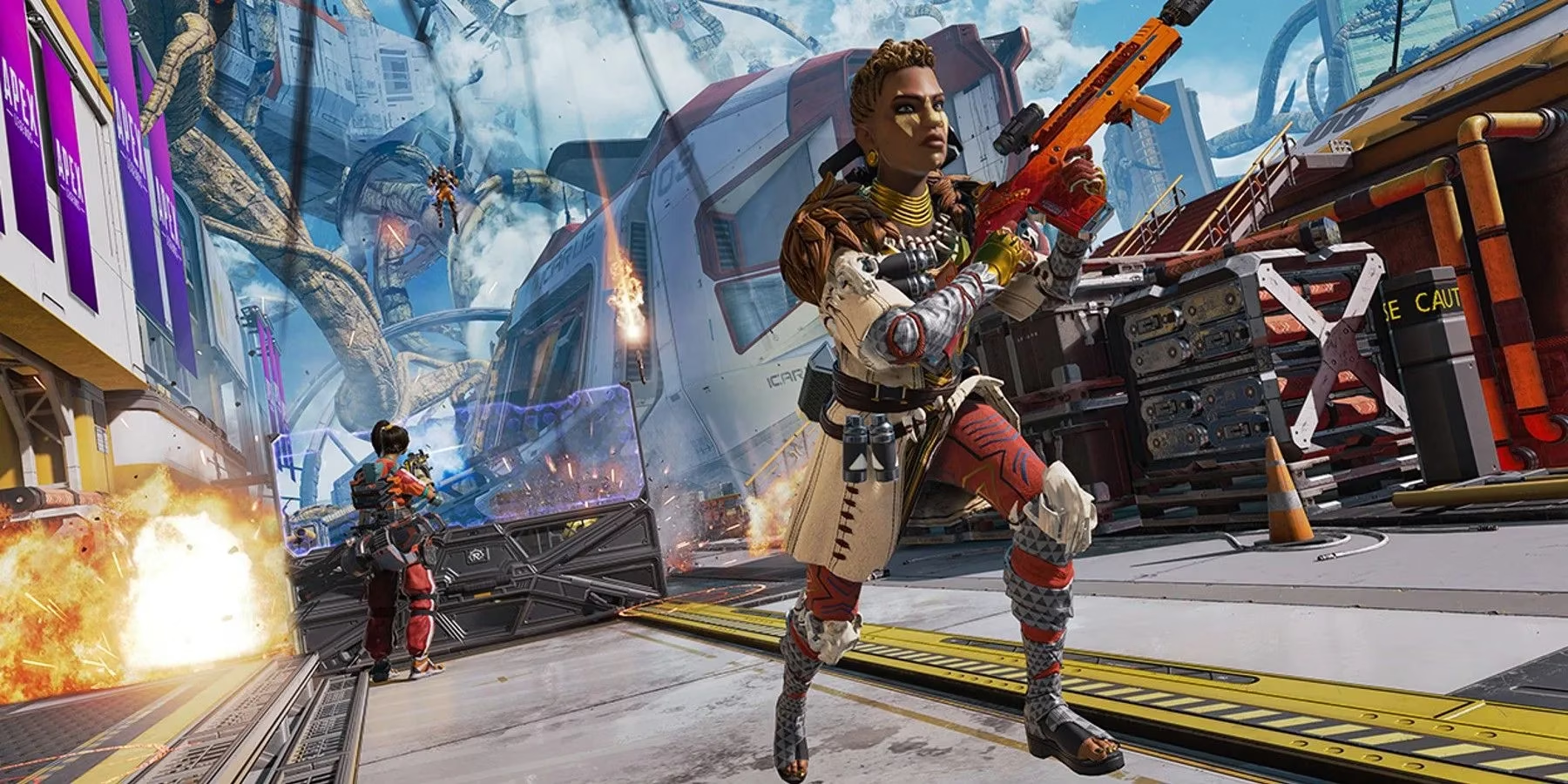
The cuts aligned grimly with CEO Andrew Wilson's February announcement: 5% of EA's workforce—roughly 670 employees—would vanish by mid-2024. Wilson cited "accelerating industry transformation" where player expectations had "changed significantly," a corporate euphemism masking deeply personal tragedies. Behind the scenes, Respawn bled beyond community managers. A promising Star Wars FPS project got scrapped, while Ridgeline Games—dedicated to Battlefield—shuttered entirely. Mobile titles like Lord of the Rings: Heroes of Middle-earth joined the casualty list, their servers fading to black as EA pivoted resources toward "prioritized projects." 🎮
People Also Ask: How Widespread Are Gaming Industry Layoffs?
This wasn't just an EA story. A domino effect toppled through studios worldwide:
-
PlayStation axed 900 jobs despite record-breaking Spider-Man 2 sales
-
Microsoft gutted 1,900 positions across Xbox and Activision Blizzard post-merger
-
Riot Games cut 530 roles while canceling indie publishing
By March 2024, over 8,000 gaming professionals had lost jobs—nearing 2023's devastating 10,000 total in barely two months. Why would an industry generating $184 billion annually shed talent so aggressively? Analysts pointed to twin pressures: ballooning AAA development costs (some exceeding $300 million per title) and pandemic-era overhiring that left studios financially exposed when player habits shifted post-lockdown.
People Also Ask: What Happens to Games After Layoffs?
Community fears simmered about Apex Legends' future. Would seasonal updates slow? Would communication degrade? Yet Season 21 launched punctually with new legend Alter, suggesting operational continuity despite bleeding institutional knowledge. The pattern repeated industry-wide: Live-service titans like Fortnite and Overwatch 2 maintained content pipelines while support studios and experimental projects bore the brunt of cuts. This strategic triage revealed uncomfortable truths—shareholders now favored predictable hits over creative gambles.
People Also Ask: Are Layoffs Still Happening in 2025?
The storm hasn't fully passed. 2025 sees cautious stabilization, yet 3,200+ job losses have already occurred—mostly at mid-sized studios. Embracer Group's collapse alone displaced 1,500. Still, the pace has slowed from 2024's hemorrhage. Survivors speak of "leaner workflows" and AI-assisted development, but morale remains fractured. When Ackerman eventually joined an indie studio, her bittersweet tweet captured the zeitgeist: "We build worlds while corporations balance spreadsheets."
Creative destruction? Necessary pruning? Such boardroom terminology feels hollow to artists packing desks. The real cost lingers in severed trust between developers and players—and in innovative concepts that'll never see daylight. As consolidation accelerates and subscription models dominate, one wonders: When the next industry transformation comes, will there be any veterans left to navigate it? 🤔
The following breakdown is based on HowLongToBeat, a trusted resource for tracking game completion times and player engagement. Their aggregated data often reflects how live-service titles like Apex Legends maintain player interest through regular updates, even amidst industry layoffs and restructuring, highlighting the resilience of established franchises in turbulent times.