
Back in 2021, Twitter was the world's loudest gaming forum. The platform recorded 2.4 billion tweets about gaming that year—a 10x jump from 2017—and Q4 2021 became the biggest quarter for gaming conversation in its history. The most tweeted-about game? Genshin Impact. The biggest surprise? Halo Infinite did not crack the top ten. And the country driving the most gaming chatter? Japan. That snapshot, first shared by Twitter, still reads like a time capsule for the live-service era. But in 2026, with the conversation scattered across X, TikTok, Discord, YouTube, and Reddit, what does that 2021 list actually tell us? A lot, as it turns out.
The 2021 Top 10 at a Glance
| Rank | Game | Genre / Platform | Why It Trended in 2021 |
|---|---|---|---|
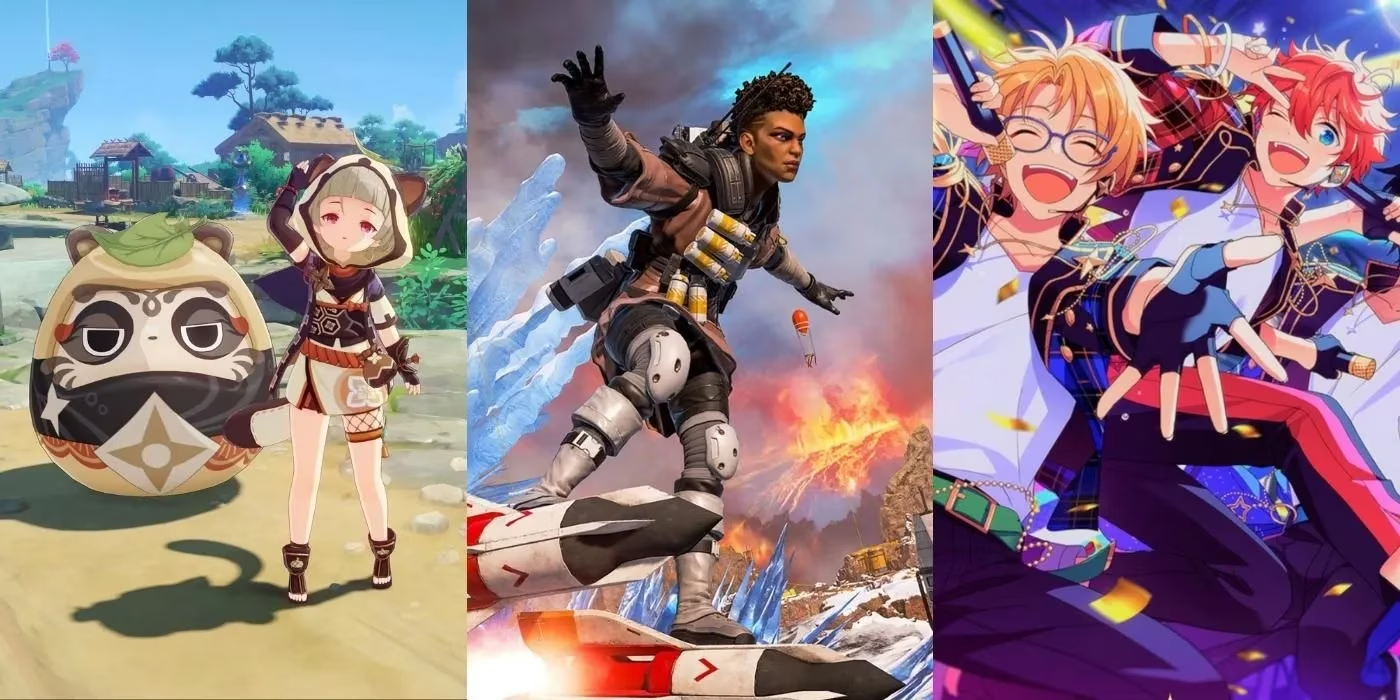
| 1 | Genshin Impact | Open-world action RPG / PC, PlayStation, mobile | The most successful first year of any video game, grossing over $3 billion on mobile alone and reaching more than 56 million monthly active players in the last 30 days of that year. |
| 2 | Apex Legends | Battle royale / PC, console | Jumped from 7th in 2020 to 2nd in 2021, becoming the most tweeted-about battle royale game, with 100 million global players and 30% year-over-year growth. |
| 3 | Ensemble Stars! | Idol visual novel and rhythm game / mobile | A Japanese franchise with two modes, Basic and Music; an English version of Ensemble Stars! Music was coming later that year. |
| 4 | Final Fantasy XIV | MMORPG / PC, PlayStation | The only MMO on the list; the Endwalker expansion was so popular that Square Enix temporarily suspended sales due to server congestion. |
| 5 | Fate/Grand Order | Turn-based RPG / mobile | A Japanese mobile giant with over a million monthly active players, even as it approached its seven-year anniversary in 2022. |
| 6 | Animal Crossing: New Horizons | Life simulation / Nintendo Switch | Nearly two years after launch, it still had 200,000 monthly active users, proving its popularity was not just pandemic timing. |
| 7 | Knives Out | Battle royale / mobile | Downloaded over 250 million times in its first year, it became the most tweeted-about mobile battle royale of 2021. |
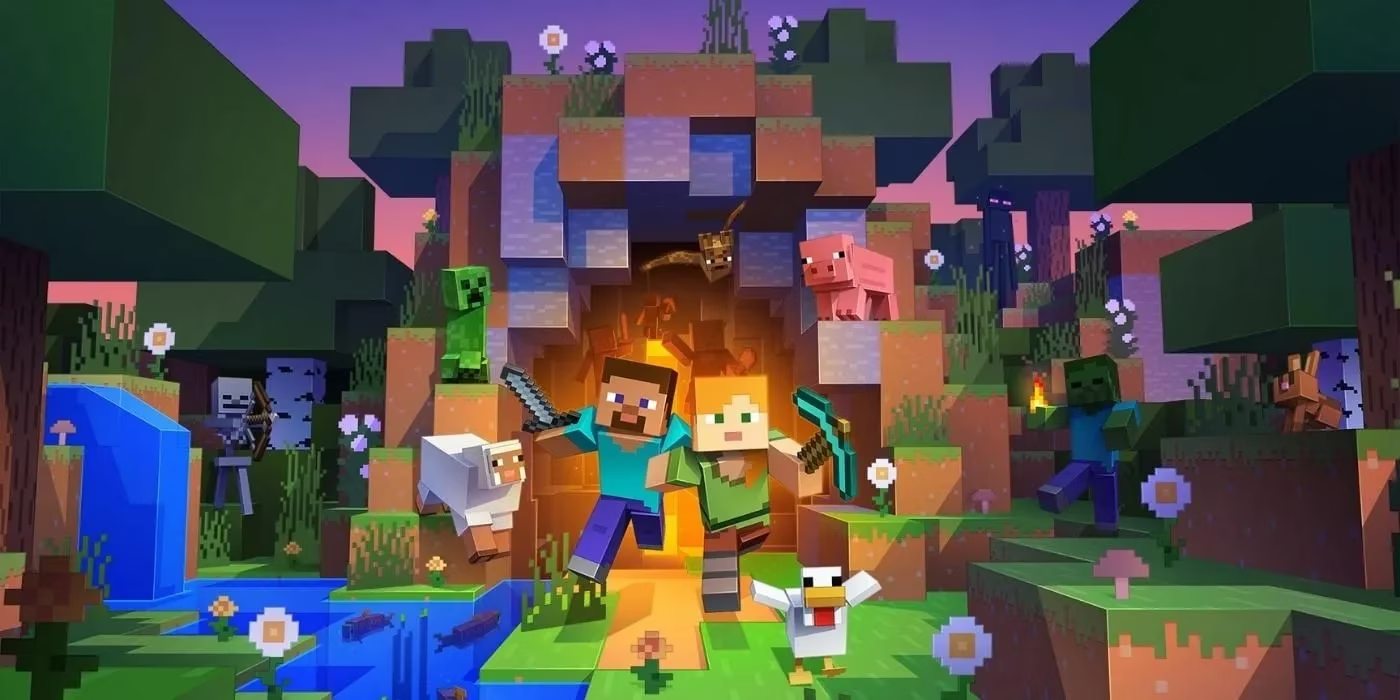
| 8 | Minecraft | Sandbox / PC, console, mobile | A new addition to the list, powered by its 10-year anniversary, 141 million active players, and a massive creator community. |
| 9 | Project Sekai | Rhythm game / mobile | A Hatsune Miku spin-off that amassed 5 million users within six months and reached the top 10 rhythm games on the App Store by the end of 2021. |
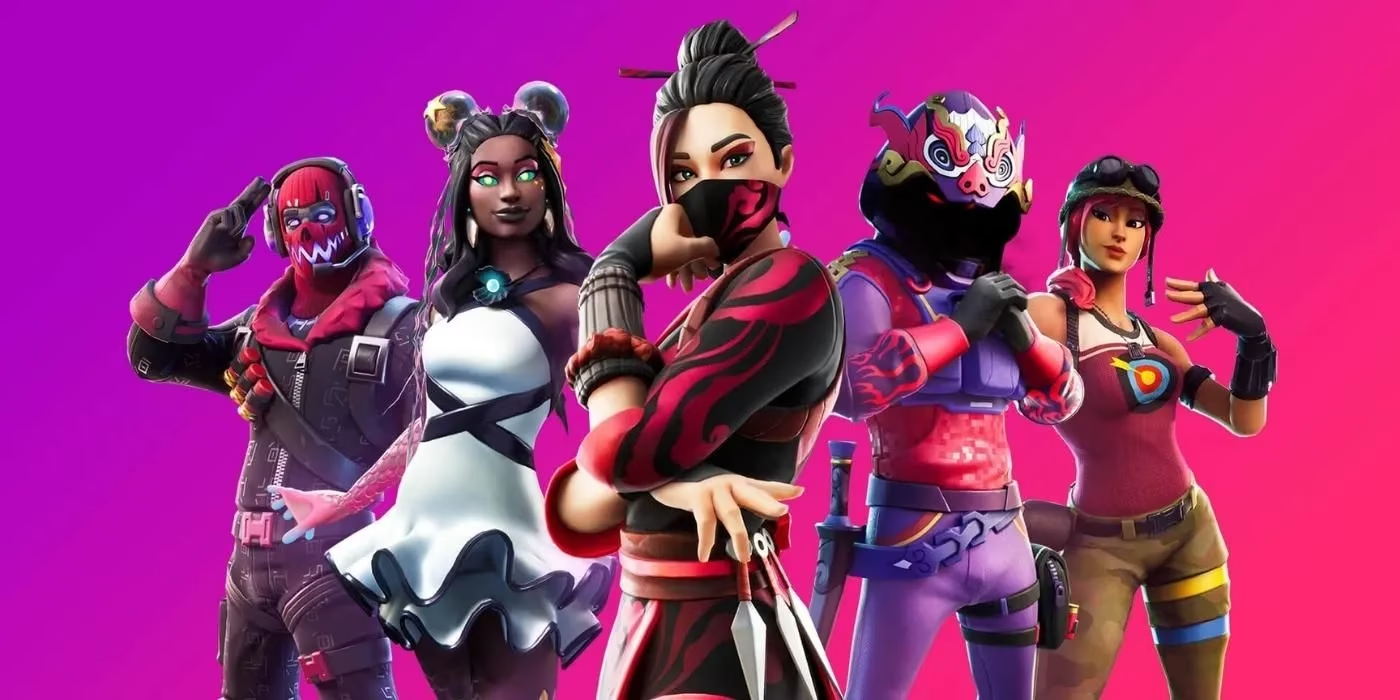
| 10 | Fortnite | Battle royale / PC, console, mobile | Still huge with 80.4 million monthly active users and up to 4 million concurrent players daily, but it slipped from 5th to 10th on Twitter. |
Why Mobile Games Owned the Conversation
Is it any wonder that Japan, the country that tweeted the most about gaming in 2021, helped push multiple Japanese mobile titles onto the list? Genshin Impact, Fate/Grand Order, Project Sekai, Ensemble Stars!, and Knives Out all thrived on mobile. Their gacha systems, seasonal events, and constant character drops gave fans something to discuss every single day. In 2026, that model has not gone away—it has only become more polished, more global, and more cross-platform. Mobile games are no longer a side category; they are often the main event.
Fortnite's Slide and Minecraft's Rise
Fortnite's drop from 5th to 10th was not a sign of collapse. With 80.4 million monthly active users, it remained a battle royale titan. The likely reason for its Twitter slide was demographic: Fortnite attracts a younger audience, while Twitter's user base skews adult. Meanwhile, Minecraft was a new addition to the 2021 list, and its rise was fueled by creators. Four of the 10 most tweeted-about gaming creators that year were Minecraft streamers or YouTubers, and Dream was the fifth most tweeted-about gaming creator overall. That creator-first ecosystem previewed the 2026 landscape, where discovery often happens through personalities before it happens through storefronts.
Apex, FFXIV, and the Power of Long-Term Live Service
Apex Legends proved that battle royale conversation was not monopolized by Fortnite. Its jump to 2nd place showed how a steady cadence of seasons, legends, and ranked play can keep a community vocal. Final Fantasy XIV, the only MMO in the top 10, demonstrated the opposite kind of staying power: years of story, raids, and expansions. Endwalker was so popular that sales had to be paused. Animal Crossing: New Horizons also held on with a loyal base long after the lockdown boom. What do these games have in common? They gave players reasons to return, not just reasons to try them once.
What the 2021 List Means in 2026
The most revealing detail might be who was missing. Halo Infinite was one of the biggest releases of 2021, yet it did not make the top 10 most tweeted-about games. That does not mean it was unpopular; it means launch hype alone does not guarantee lasting conversation. The games that dominated Twitter in 2021 were mostly live-service titles with global communities, regular updates, and strong mobile or creator ecosystems. In 2026, that formula still rules. Genshin Impact, Fortnite, Minecraft, Apex Legends, and Final Fantasy XIV remain part of the gaming vocabulary, even as new platforms and new social apps reshape where fans talk.
The 2021 list also reminds us that Japan's influence is not a niche story. It is a central one. Mobile gacha games, rhythm games, idol games, and RPGs drove billions of impressions. As the industry moves further into cross-play, cloud streaming, and creator-led marketing, the lesson is clear: the loudest games are not always the newest. They are the ones that keep giving players something to talk about. 🎮
Source: Twitter
Data referenced from Esports Charts helps contextualize why live-service titles dominated the 2021 Twitter gaming rankings: games that sustain frequent updates, ranked ladders, and tournament moments create recurring spikes of attention that are easy to spot across social platforms. When you pair that with 2021’s heavy Japan-driven mobile chatter (gacha events, collaborations, and character releases) and creator-led ecosystems (especially around sandbox and battle royale games), the list reads less like a one-year anomaly and more like an early indicator of how measurable engagement—viewership peaks, competitive seasons, and content cycles—keeps games “talkable” long after launch hype fades.