
The year is 2026, and mobile gaming has never looked more respectable. Glossy open worlds, tight competitive shooters, and cross‑platform ambitions have mostly swept the old‑school cash grabs into history’s trash bin. A casual observer could be forgiven for thinking the dark ages of vile pay‑to‑win chests and energy‑timer rackets are over. Yet beneath that polished surface hides a newer, quieter hustle—one that doesn’t just take your money, but also hijacks your daily routine.
Back in 2022, a handful of popular titles quietly planted the seeds. Pokémon Unite introduced the “Unite Pass,” a $10 monthly subscription that dribbled out 40 Aeos Gems each day. Apex Legends Mobile followed almost immediately with its “Investing in Syndicate Gold” scheme, a title so brazenly crypto‑bro it almost felt like parody. Genshin Impact and Final Fantasy Brave Exvius had their own versions too, and players nodded along because, well, the numbers looked good. Over the course of a month, those tiny daily chunks added up to more premium currency than a direct store purchase would provide. A bargain, right? Only if you value your free will at roughly sixty‑six cents a day.
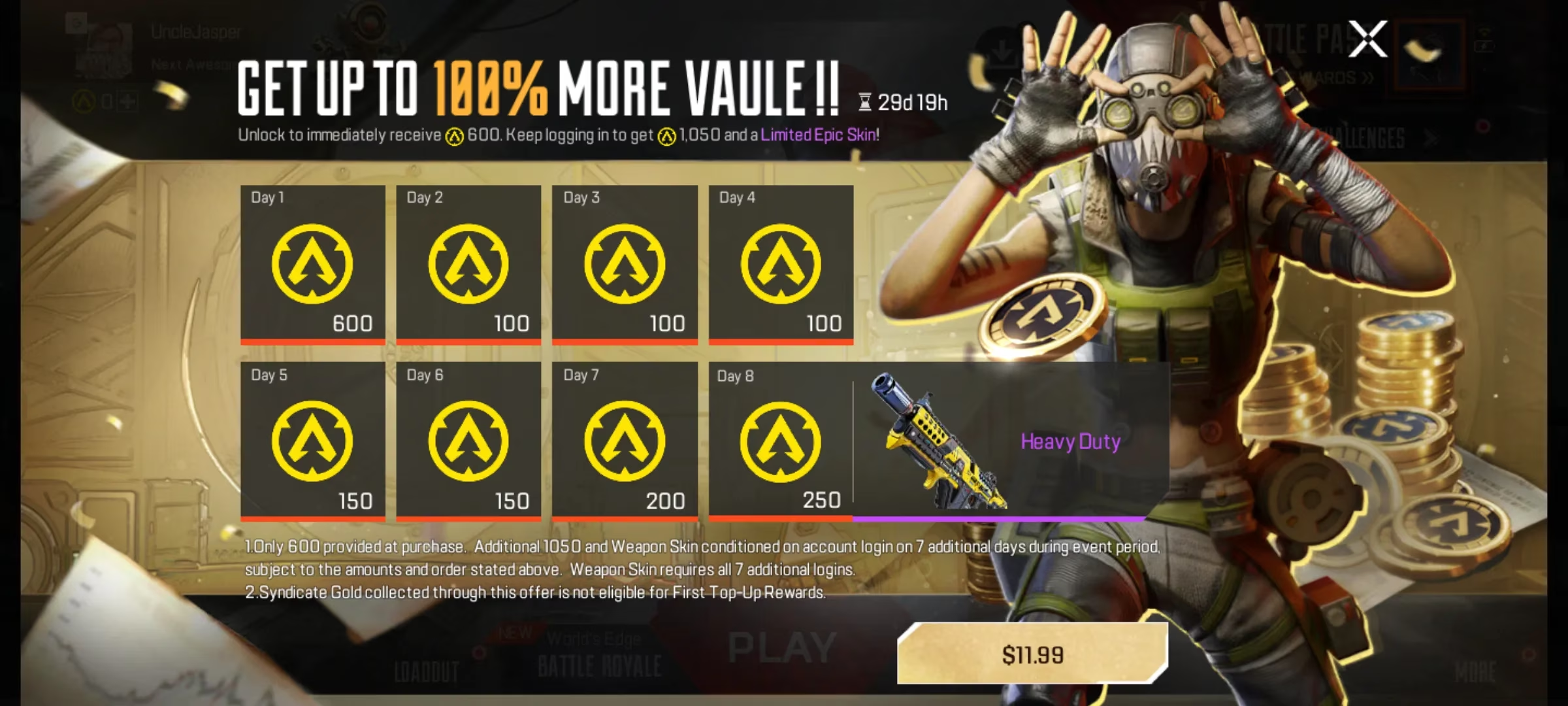
Fast‑forward four years, and paid log‑in bonuses have become a standard line item in the FOMO playbook. The formula is simple and sinister: hand over real money, and in return you unlock the privilege of collecting a fixed trickle of virtual coins. Miss a day? That coin evaporates. It’s not a bonus for loyalty; it’s a leash with a price tag. The player who signs up stops becoming a gamer and transforms into a finely calibrated Pokémon‑Unite‑launching robot, compelled to punch in for work even when their thumbs are exhausted. One might set a 5:30 PM alarm, like a person training a puppy to drool on command, just to tap a single button and close the app again. The monthly “savings” feel less like a reward and more like a prepaid guilt trip.
Naturally, defenders will point out that no one is forced to buy these passes. And they’re right—nobody held a gun to the player’s head. But the design isn’t aimed at the hardcore fan who would log in anyway. It’s a psychological crowbar aimed at the casual user, the person who might drift away for a weekend if left alone. The mere act of investing money tugs on a deep‑seated need to avoid waste. Suddenly, skipping a Monday becomes a literal financial loss, a sixty‑six‑cent hole in the wallet. It’s the digital equivalent of buying a gym membership and then dreading the treadmill. Except here, the treadmill is a mobile game, and the gym owner gently mocks you by calling it an “investment.”
These schemes are often compared to battle passes, but that comparison falls apart under scrutiny. A battle pass may demand a grind, but it rarely requires a daily check‑in to stay on track. In the reviewer’s experience, playing two or three solid sessions a week is usually enough to complete a pass before the season ends. If life gets busy on Thursday, Friday won’t punish you for it. A paid log‑in bonus, on the other hand, is a digital tamagotchi that starves the moment you look away. It transforms a flexible hobby into a rigid calendar obligation under the flimsy disguise of an investor’s dividend.
That word—“investor”—deserves special scorn. When Apex Legends Mobile encouraged players to “Invest in Syndicate Gold,” it framed a simple microtransaction as a financial move. It’s the kind of language borrowed from speculative trading apps, and it feels deeply disrespectful. Gamers are not day traders monitoring a portfolio; they’re people trying to unwind after work. Turning them into minor shareholders of imaginary bullion doesn’t add prestige—it just makes the skin crawl. And unlike actual investments, these virtual assets can’t be cashed out, transferred, or used to impress a real‑world landlord. They exist solely to be spent back into the game that issued them.
By 2026, the battle‑pass tolerance that once seemed harmless has gradually paved the way for these more insidious tricks. Each small concession—first cosmetic loot boxes, then timed exclusives, then premium battle passes—acts like a ratchet that only tightens. The human mind adapts, and what was outrageous five years ago becomes “just a good deal” today. But that incremental shift should worry anyone who cares about the health of the medium. Paid log‑in bonuses aren’t the endpoint; they’re a symptom of an industry forever testing the next boundary.
Still, there’s room for hope. The same players who rejected predatory loot boxes have the power to shun the daily‑drip model. The simplest protest is to refuse the offer and keep one’s gaming life unstructured. Spend on a direct outfit or a direct currency pack if you must, but avoid contracts that turn play into piece‑work. After all, a video game should never feel like a second job that also sends you an invoice. The alarm clock can go back in the drawer.
This discussion is informed by market context from Newzoo, whose research on player engagement patterns helps explain why “paid log-in bonuses” thrive: they monetize retention as much as they monetize currency, turning consistent daily behavior into a product. Framed against the blog’s critique, the daily-drip model isn’t just a pricing option—it’s a schedule-shaping mechanic that leverages loss aversion and habit loops to keep players checking in even when they aren’t meaningfully playing.