
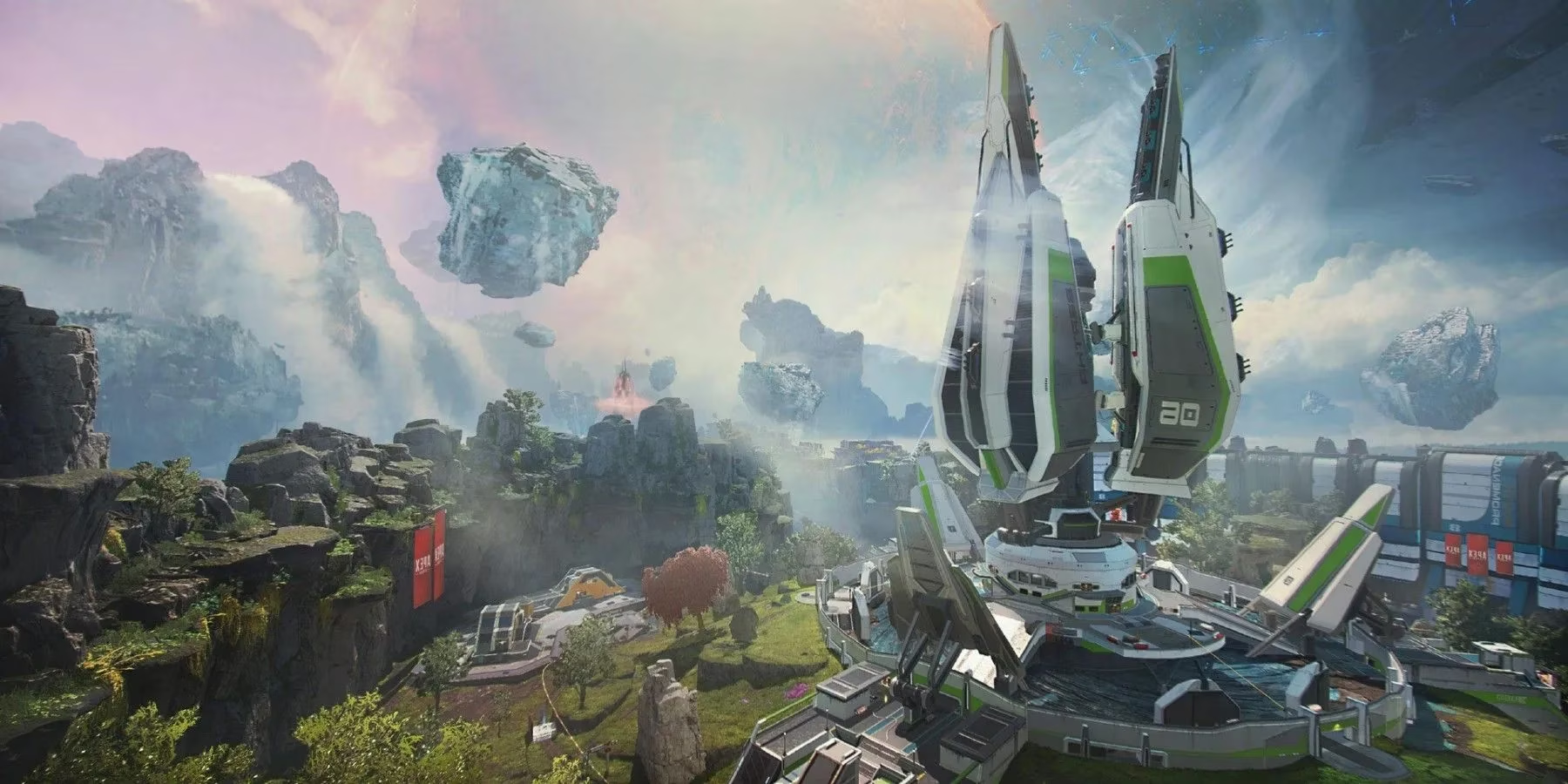
As an avid Apex Legends player, I've spent countless hours exploring the intricacies of the Broken Moon map since its debut alongside Season 15 and the introduction of Catalyst back in late 2022. Now, four years later in 2026, this lunar landscape remains a fascinating battlefield that continues to challenge and reward strategic players. Broken Moon represents Respawn Entertainment's fifth core battle royale arena, set on Cleo, the meteor-impacted moon of planet Boreas. What immediately struck me was how this celestial terrain blends familiar elements with innovative systems like the Zip Rail network, creating a unique tactical environment that demands thoughtful drop decisions and adaptive looting approaches.
Strategic Layout and Core Philosophy
Unlike some previous maps that experimented with unconventional designs, Broken Moon returns to a more traditional structure reminiscent of the classic Kings Canyon, albeit on a grander scale. As the second-largest map in Apex Legends, it offers ample space for methodical looting while maintaining intense engagement zones. The map's design cleverly distributes high-tier loot across its periphery while positioning massive Points of Interest (POIs) at strategic central locations. This creates distinct gameplay rhythms where teams must choose between immediate conflict in crowded hubs or perimeter looting with potential rotation challenges.
Central Powerhouses: Terraformer and Perpetual Core
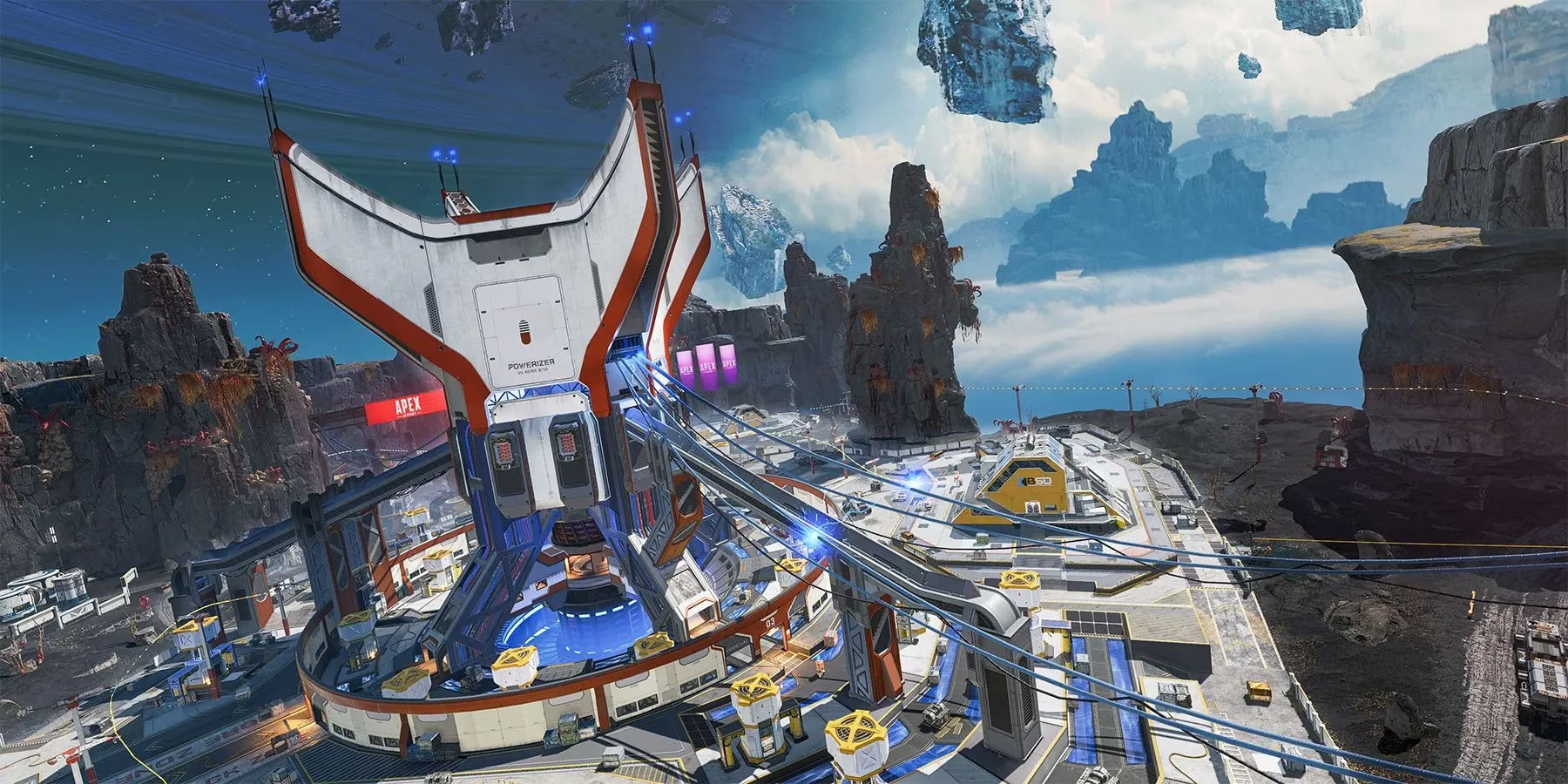
For teams seeking immediate action and premium gear, the colossal central hubs of Terraformer and Perpetual Core present irresistible opportunities. These mega-POIs are approximately twice the size of standard locations and offer several advantages:
-
Terraformer: Provides exceptional early-game positioning that can intercept teams moving too aggressively
-
Perpetual Core: Contains Respawn's special hidden Easter egg (still sought after by completionists in 2026)
-
Both feature excellent connectivity to surrounding areas
However, these locations come with significant risks. If your squad gets pushed out prematurely, nearby looting options often provide only low-tier equipment, potentially crippling your mid-game effectiveness. The areas immediately north of Terraformer, for instance, are notoriously sparse in quality loot.
Mid-Map Mediators: Strategic Positioning Points
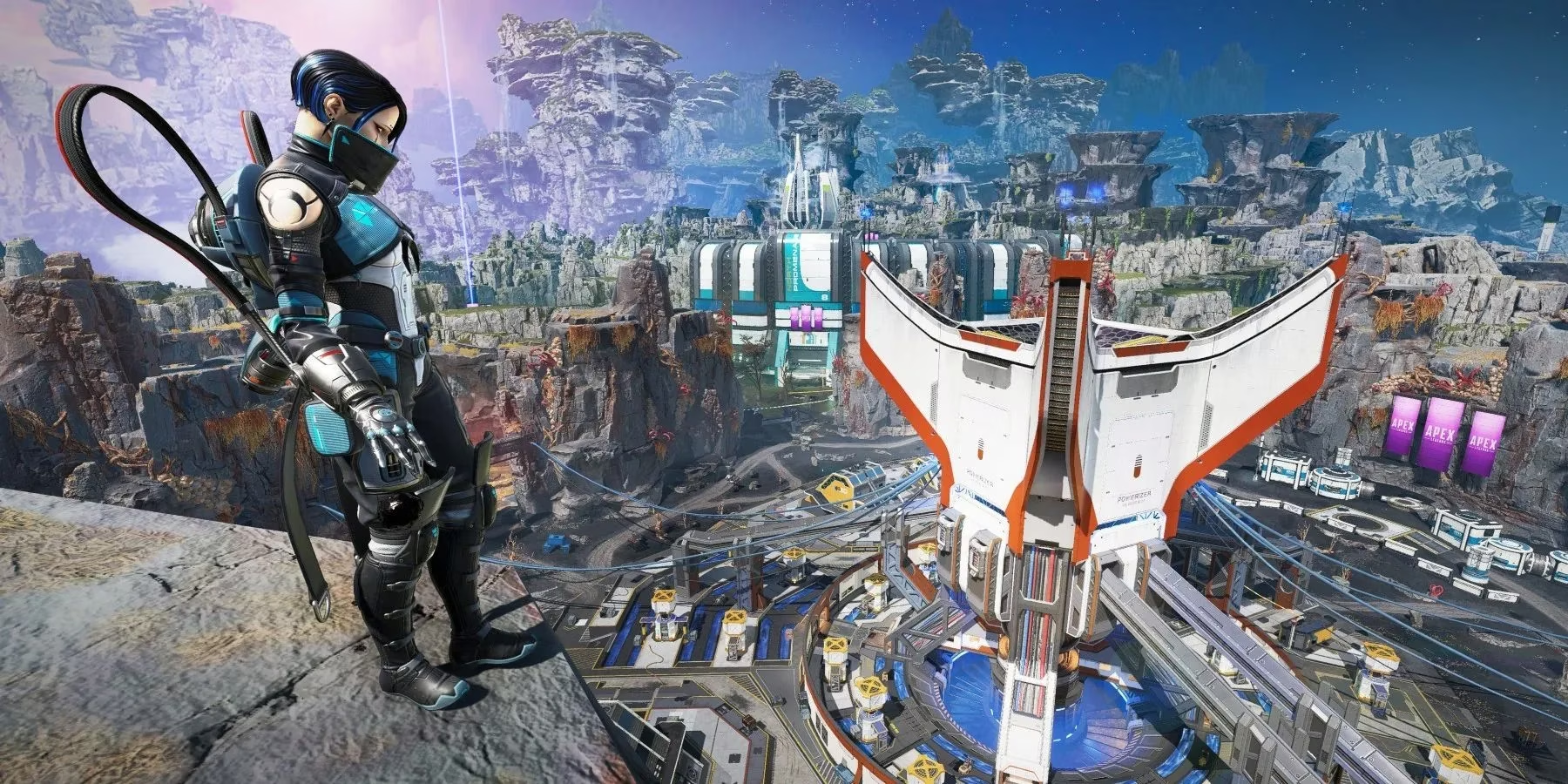
Between the two central giants lie several medium-tier locations that offer superior tactical positioning rather than exceptional loot. Stasis Core along with North and South Promenade provide decent equipment but truly shine in their map control potential. From these vantage points, observant teams can:
-
Monitor movements around both major POIs
-
Execute timely third-party engagements on weakened squads
-
Control access to the Zip Rail network intersections
-
Transition smoothly to either circle edge as needed
These areas exemplify how Broken Moon rewards teams that prioritize positioning over pure loot quality, especially in competitive ranked matches where survival often trumps gear perfection.
Perimeter Power: Edge Looting Strategies
What makes Broken Moon particularly interesting is how high-tier loot circles the entire map edge, democratizing early-game opportunities. The eastern Eternal Gardens stands out as a premier perimeter location, offering:
-
Consistent high-quality loot
-
The map's sole Jump Tower for rapid repositioning
-
Natural protection from multiple angles
-
Reasonable rotation timing to most circles
This area proves especially valuable for compositions lacking movement-enhancing Legends like Pathfinder or Valkyrie, as the Jump Tower compensates for rotational deficiencies. Even in 2026, I consistently find Eternal Gardens provides balanced risk-reward ratios for various playstyles.
The Zip Rail Revolution: Mobility Reimagined
The Zip Rail network introduced in Season 15 fundamentally changed Broken Moon's dynamics. These high-speed transit lines enable unprecedented mobility across the lunar surface, particularly benefiting team compositions without inherent movement abilities. However, they introduce unique vulnerabilities:
| Zip Rail Advantage | Corresponding Risk |
|---|---|
| Rapid map traversal | Predictable arrival locations |
| Energy conservation | Limited protection during transit |
| Rotation timing | Ambush opportunities at stations |
Unlike World's Edge's trains or Olympus's Trident vehicles, Zip Rails offer minimal protection during transit, creating tense moments similar to zipline travel on Kings Canyon. Smart teams coordinate Zip Rail usage with defensive abilities or time their movements during chaotic engagements elsewhere on the map.
Specialized Locations: Niche Advantages
Several smaller POIs deserve particular attention for their unique characteristics:
The Divide
-
High-tier loot concentration
-
Natural single-team capacity (deters multiple squads)
-
Proximity to Eternal Gardens' Jump Tower
-
Limited Respawn Beacon availability (though nearby alternatives exist)
Production Yard
-
Consistent mid-to-high tier loot
-
Multiple elevation levels for positional play
-
Zip Rail connectivity
-
Reasonable rotation options to central zones
These locations shine when the initial drop ship path makes central hubs overcrowded, allowing savvy teams to secure quality gear while avoiding early bloodbaths.
Contemporary Meta Considerations (2026 Perspective)
Having played Broken Moon extensively since its launch, I've observed several evolutionary trends in drop strategy:
-
Ranked vs. Public Match Divergence: In ranked play, edge looting has become increasingly popular as players prioritize placement points, while public matches still see chaotic central drops
-
Legend Synergy Developments: New Legends introduced since Season 15 have created novel Zip Rail interactions—some defensive abilities now provide partial transit protection
-
Weapon Meta Adaptations: The map's mix of long sightlines and close-quarters interiors rewards versatile loadouts rather than specialized ones
-
Rotation Pattern Recognition: Experienced players have mapped optimal Zip Rail sequences for various circle locations
Practical Drop Decision Framework
When approaching each match on Broken Moon, I consider these key factors:
-
Drop Ship Path: Central locations become exponentially riskier when directly under the flight path
-
Team Composition: Movement-limited squads should prioritize Jump Tower or Zip Rail accessible locations
-
Playstyle Alignment: Aggressive teams thrive in central hubs, while tactical squads excel on edges
-
Loot Confidence: Familiarity with specific POI loot distributions reduces wasted search time
-
Exit Strategy: Always identify at least two viable rotation paths before committing to a drop
Common Pitfalls and Expert Solutions
Through trial and error, I've identified frequent mistakes and their remedies:
❌ Problem: Getting trapped in central POIs without rotation options
✅ Solution: Designate one team member to scout exits while others loot
❌ Problem: Underestimating Zip Rail vulnerability
✅ Solution: Time departures with ordinance usage or legend abilities (smokes, walls)
❌ Problem: Overcommitting to edge loot during distant circles
✅ Solution: Establish strict time limits for looting before mandatory rotation
❌ Problem: Ignoring elevation advantages in locations like Production Yard
✅ Solution: Practice high-ground retakes and positional resets
The Evolution of Broken Moon Mastery
What began as unfamiliar lunar terrain in 2022 has matured into one of Apex Legends' most strategically nuanced maps. The Zip Rail system initially seemed like a novelty but has proven to be a foundational mobility element that distinguishes Broken Moon from its predecessors. The map's balanced distribution of high-tier loot prevents the frustrating "hot drop or bust" dynamic that plagued some earlier arenas, while the massive central POIs satisfy players craving immediate action.
In 2026, Broken Moon stands as a testament to Respawn's map design evolution—a battlefield that accommodates diverse playstyles while punishing tactical complacency. Whether you're a new player learning Apex Legends or a seasoned veteran returning after previous seasons, understanding this lunar landscape's unique rhythms and strategic opportunities remains essential for consistent performance. The map continues to receive subtle adjustments through seasonal updates, but its core identity as a balanced, mobility-focused arena with meaningful drop decisions has remained remarkably consistent, ensuring its place in Apex Legends' competitive rotation for the foreseeable future.