
I still remember the moment the ALGS Pro League Split 2 map announcement hit my feed. My squad and I had just finished another World's Edge scrim block, and I was mentally preparing for the same old rotations. For as long as I had followed competitive Apex, World's Edge had been the centre of the universe: TSM dropping Fragment East, SoloQgoats taking Trials, Riddle holding Lava City. That map was iconic, but after countless matches, it felt more like muscle memory than an adventure. Then the announcement arrived: Storm Point would enter Split 2.
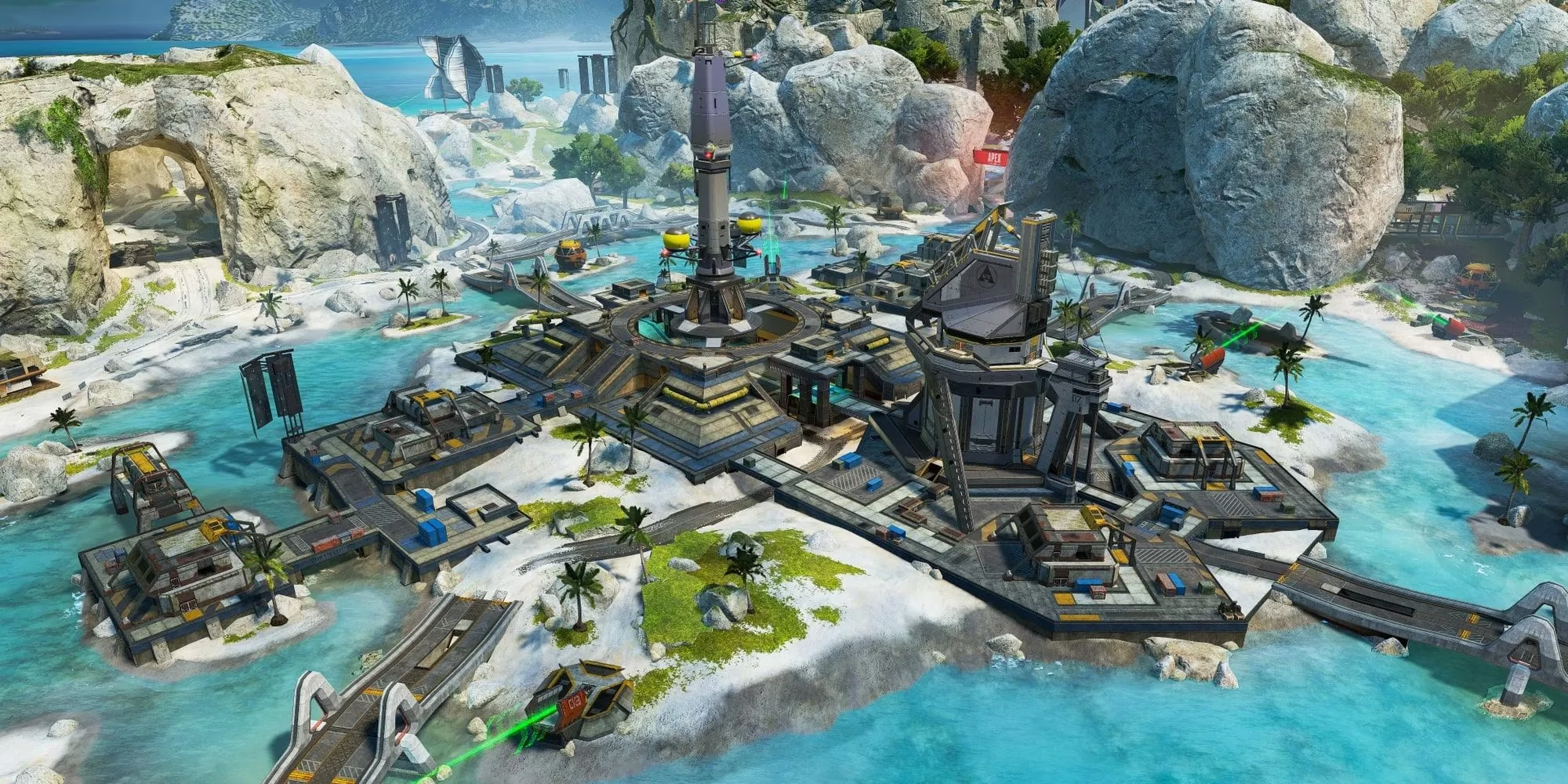
At first glance, the choice made perfect sense. Storm Point was designed by Rodney Reece, the same designer behind World's Edge. If anyone understood competitive map flow, it was him. The map had beautiful verticality, long sightlines, and distinct POIs that begged for strategic drop contests. However, as I dropped into customs and scrims, the flaws became impossible to ignore. The Prowlers were wildly aggressive before their nerf, and the sheer landmass created weird rotation problems. From certain dropship trajectories, some landmarks felt unreachable; from others, rotating across the map became a painful death march. I remember sitting in a post-scrim voice chat and half-jokingly suggesting that two dropships might solve the spacing issue. But in a competitive setting where teams preselect landing zones, adding a second ship would only inject more RNG, and battle royale esports already have enough luck as it is.
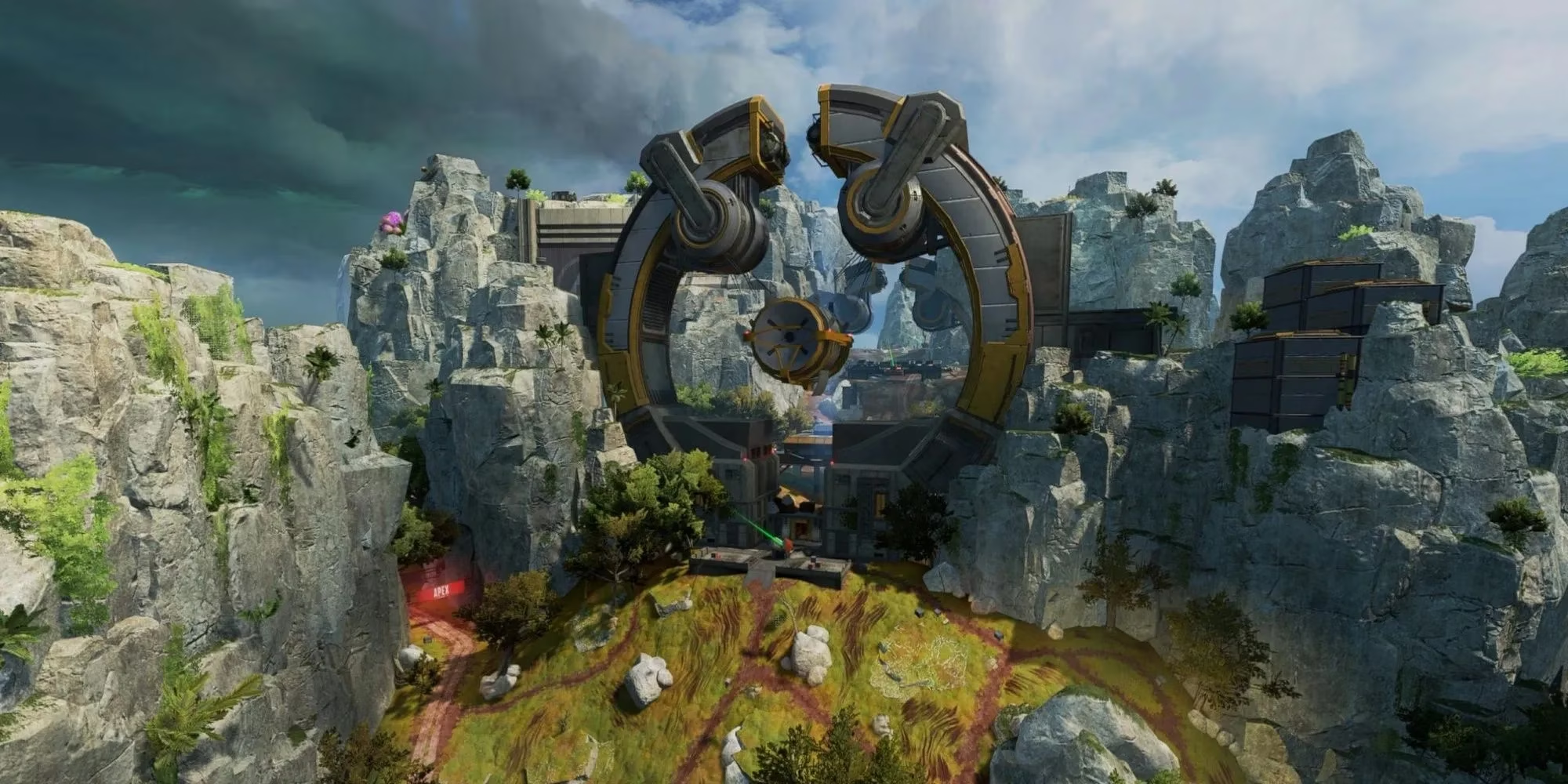
The map's size also warped the legend meta. Valkyrie went from strong pick to near-mandatory because her ultimate redeploy made huge rotations survivable. Her popularity was already high thanks to three passive abilities and a free skyward escape, but Storm Point made her feel less like a choice and more like a requirement. When you locked Valkyrie, Gibraltar became even more essential to protect the landing, leaving only one slot for an off-meta experiment. Fuse lab work faded, Crypto and Caustic rose, and I remember hoping Mad Maggie would eventually give us something unpredictable.
Still, there was a wave of relief among fans and players who were tired of World's Edge. The announcement landed just a couple of weeks before Split 2 kicked off, and the drop spot gold rush started immediately. Teams began publicly calling their preferred POIs on Twitter and Discord, which felt both entertaining and dangerous. Contesting a POI in high-level Apex is usually a death sentence for both squads, so the most influential teams simply bagged the best areas while smaller teams waited to see what was left.
| POI | Early Contested Teams |
|---|---|
| The Mill | Sentinels |
| Storm Catcher | XSET, AGG, Lazarus, CLT, Alliance |
| Command Center | Cloud9, CLG, Na'Vi, FAV |
My personal favourite was Lightning Rod, high on the map's biggest hill. A Valkyrie rotation from that rooftop felt like launching from a fortress, even if I was far from a professional player. The chaotic start was inevitable: two weeks of practice, a map absent from Season 12 ranked and public rotation, and plenty of regional scrims that teams didn't take seriously. Looking back from 2026, I still think Storm Point was pushed into ALGS too quickly, but it opened the door to more diverse maps. That first split taught me that competitive Apex needed freshness, even if the landing was messy. It made me wonder whether Olympus would ever get a true competitive shot, and it proved that even a map built with ALGS intent can create chaos when it arrives too fast.