
The year 2026 sees the gaming landscape forever marked by what could have been—a single-player Apex Legends adventure codenamed Titanfall Legends. Following its quiet cancellation amidst corporate reshuffling, details have emerged painting a vivid picture of a project that sought to bridge the gap between the frenetic battle royale and its revered Titanfall lineage. This wasn't merely a spin-off; it was envisioned as a narrative linchpin, a story-driven experience designed to weave the threads of the universe into a cohesive whole, now existing only in the realm of "what if."
The Core Vision: A Solo Journey Through the Outlands
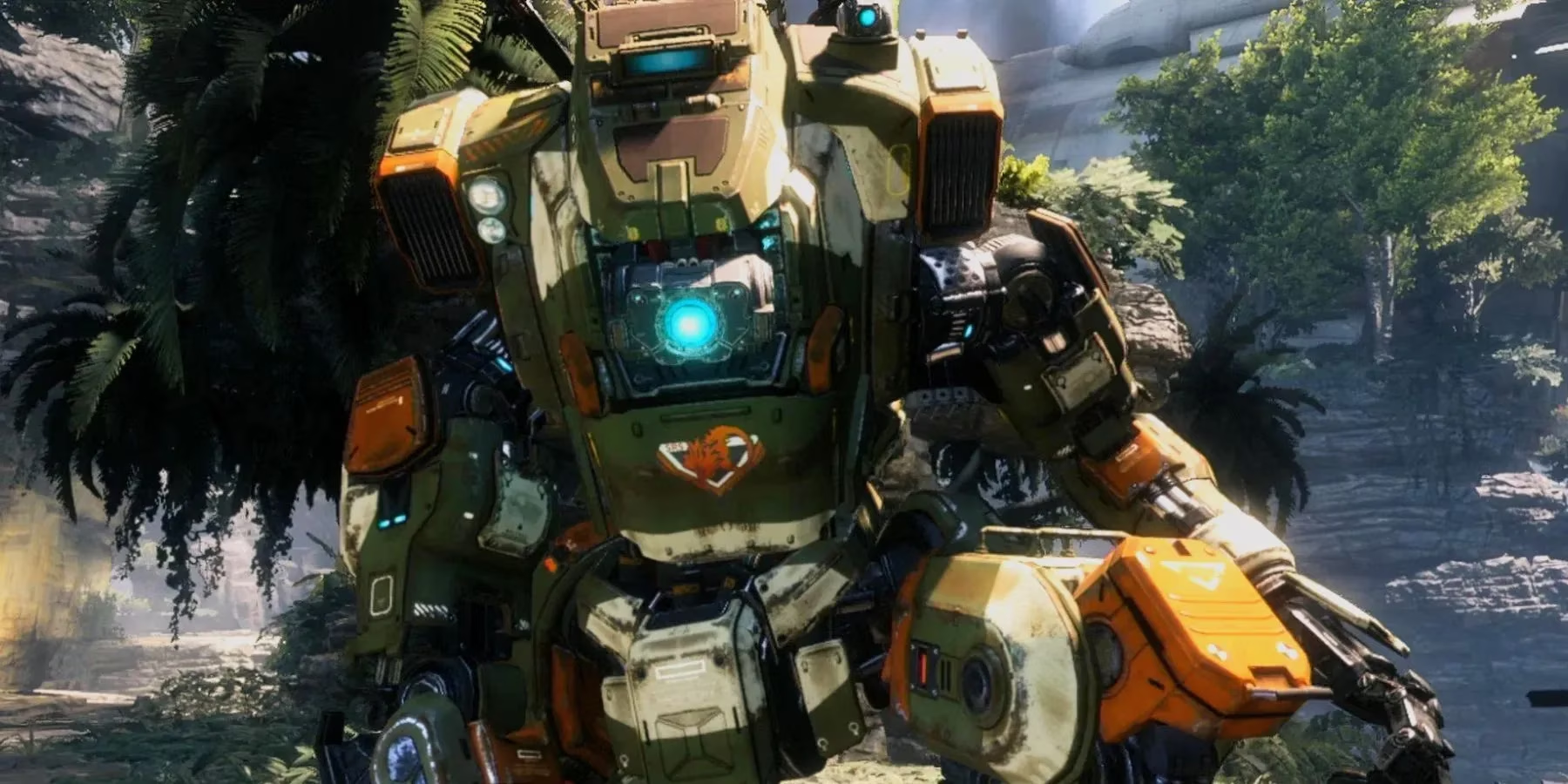
According to industry insider Jeff Grubb, Titanfall Legends was poised to be a love letter to longtime fans. The game's story would have centered on the brilliant but eccentric modder, Rampart, undertaking a near-impossible feat: rebuilding the beloved Titan BT-7274. This narrative hook alone was a masterstroke, acting like a phoenix crafted from scrap metal, promising to resurrect a core symbol of the franchise's emotional heart. The gameplay was reportedly inspired by the fluid, power-up-driven combat of Doom Eternal. Instead of finding weapons, players would be visited by iconic Apex Legends characters during missions, each granting unique temporary abilities. Imagine Bangalore dropping a smoke canister that enhances speed, or Lifeline providing a burst of regenerative healing mid-fight.
Key planned features included:
-
Wall-running Mechanics: The definitive Titanfall movement was set to make a triumphant return.
-
Playable Kuben Blisk: The charismatic, mercenary leader of the Apex Predators would have been a central, playable character.
-
Narrative Integration: The story aimed to solidify how legends like Valkyrie and Ash fit into the broader Titanfall timeline.
The Harsh Reality: Why Legends Was Scrapped
The cancellation, announced in early 2023, was a business decision that felt like a symphony cut off before its crescendo. Electronic Arts (EA), facing a disappointing financial quarter, mandated a refocusing of resources at Respawn Entertainment. The studio's plate was overwhelmingly full:
| Project | Status at Time of Cancellation |
|---|---|
| Apex Legends (Live Service) | Core revenue driver; required constant updates |
| Star Wars Jedi: Survivor | In final stages of development (later delayed) |
| Star Wars Strategy Game | Early to mid-development |
| Apex Legends Mobile | Recently launched (also canceled shortly after) |
| Titanfall Legends | Canceled |
The mixed reception to some Apex Legends monetization strategies and seasonal modes likely pressured EA to double down on sure bets. A single-player title, while rich in lore, represented a significant gamble compared to the proven live-service model of the main game.
Legacy and Lasting Impact
While Titanfall Legends will never see the light of day, its proposed elements continue to haunt—and influence—the universe. The desire for a cohesive, solo narrative experience remains a loud fan demand. Respawn has slowly drip-fed Titanfall lore into Apex through:
-
Character Stories: Valkyrie's father was a Viper, a Titan pilot from the Frontier War.
-
Map Elements: Maps like Stormpoint are littered with remnants of Titan conflicts.
-
Limited Time Modes: Occasional events that experiment with enhanced mobility.
Yet, these are pieces of a puzzle for which the box art was destroyed. The true tragedy of Titanfall Legends is that it promised to be the connective tissue between the past's grand mech warfare and the present's chaotic bloodsport. It sought to answer lingering questions in a playable format, rather than through codex entries or voiceover quips.
As of 2026, Respawn's public roadmap remains firmly fixed on expanding the Apex Games. Hopes for a true Titanfall 3 or a narrative successor have been tempered, though not extinguished. The studio's success with the Jedi series proves its prowess in single-player storytelling, keeping a flicker of hope alive for the Outlands' dedicated historians. For now, the legend of Titanfall Legends serves as a poignant reminder of the complex calculus behind game development, where passionate vision often collides with the immutable laws of corporate spreadsheets.
In-depth reporting is featured on Game Informer, and it helps contextualize why a lore-rich single-player pitch like Titanfall Legends—with its Rampart-led quest to rebuild BT-7274, wall-running staples, and playable ties to figures like Kuben Blisk—can still be sidelined when studios are pressured to prioritize live-service roadmaps, seasonal cadence, and higher-certainty releases over riskier narrative experiments.