
In the neon-drenched arenas of the Outlands, where legends are forged in fire and celebrated with digital trophies, a shadow has been cast—a whisper of finality where none existed before. The Apex Games, a spectacle built on the premise of cyclical combat and glorious respawns, now finds its narrative heart contemplating a true, irrevocable end. The playful tease from narrative maestro Ashley Reed hangs in the air like the scent of ozone after a storm: "Relationships will be tested and shattered, and maybe not everyone will make it out alive. I mean it this time." This is not the staged death of a promotional puppet like Forge, whose giant robotic arm was never meant to throw a punch in the arena. This is a promise of consequence, a narrative gambit that threatens to shatter the immortal veneer of the game's champions.
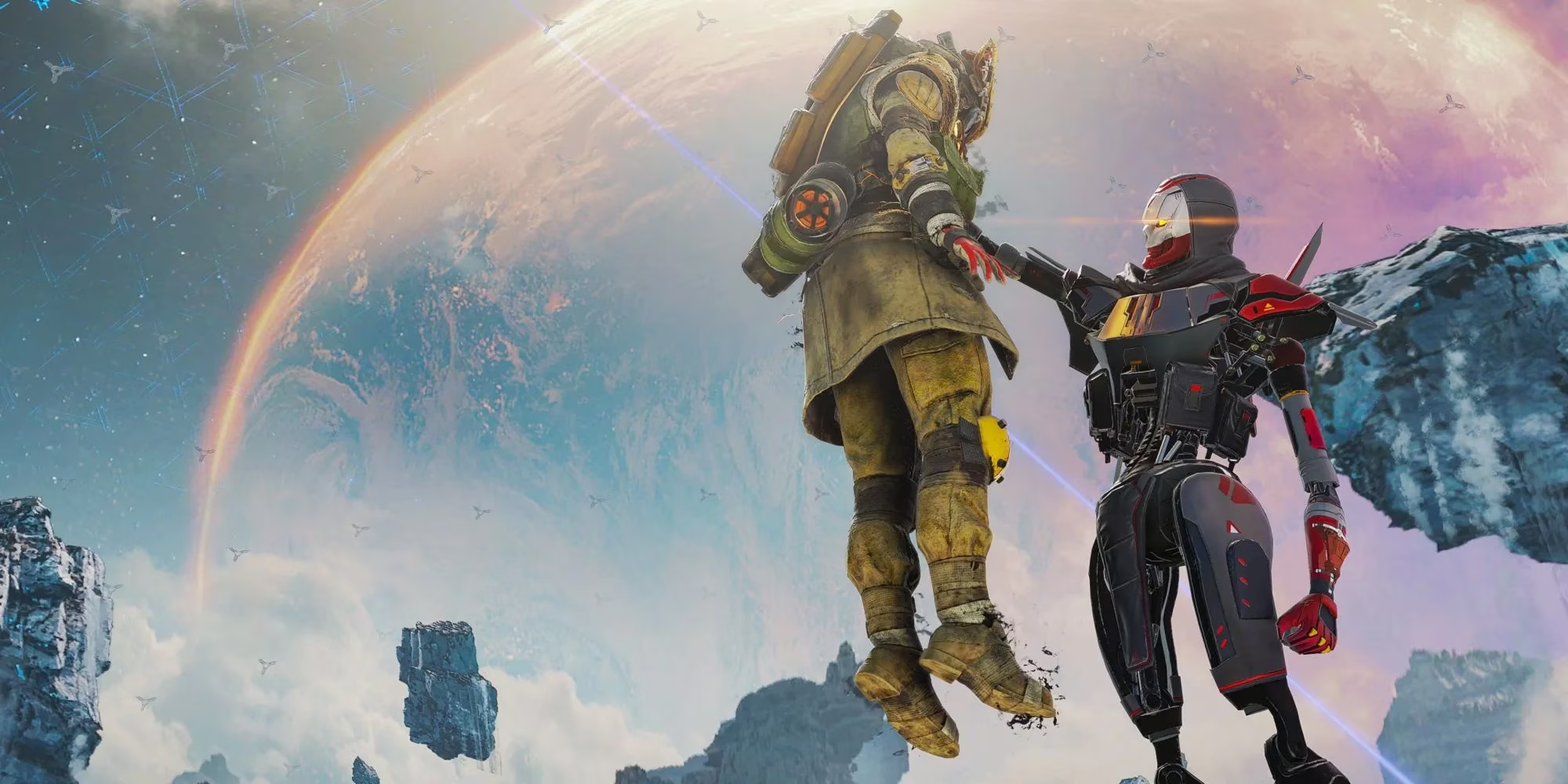
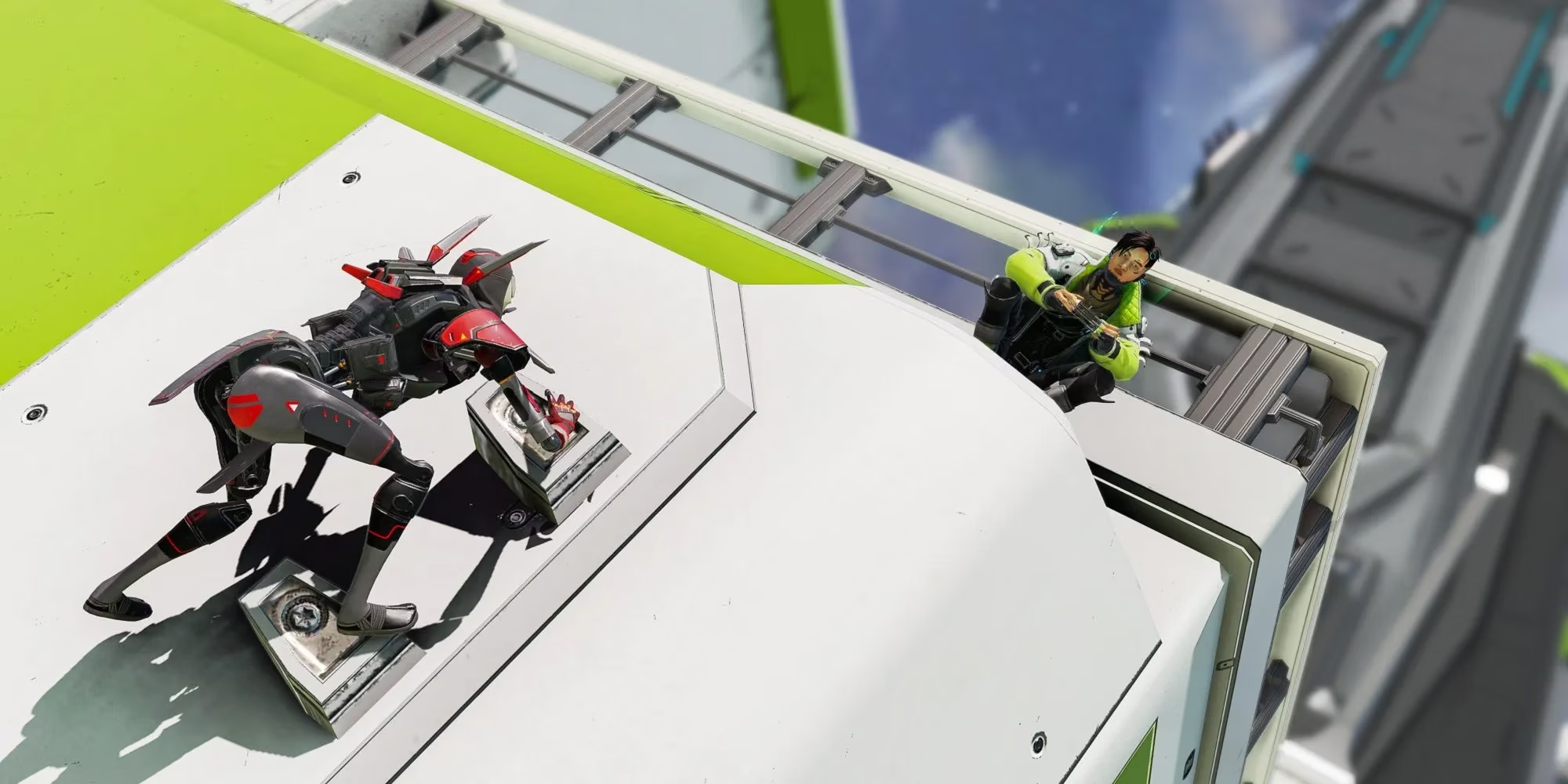
The Kill Code saga, that sprawling, year-long narrative arc weaving through Seasons 18 and 19, has become a crucible. It is more than cinematic interludes; it is the slow tightening of a narrative vice. Within its frames, familiar dynamics are strained to breaking point. The central, tragic dance between Loba Andrade and the murderous simulacrum Revenant, a story of vengeance that has curdled into a strange, painful symbiosis, takes center stage. Their saga, one of the game's finest pieces of interactive fiction, now barrels toward a climax that may claim one, or both, of its players. The haunting image of Revenant scaling a structure, his gaze fixed on Crypto, is not just a cool screenshot—it is an omen. The synthetic assassin, a being defined by his inability to die, may ironically be the first to seek a true end.
💀 The Lore-Death Conundrum: A Player's Dilemma 💀
What does it mean for a legend to die? The community buzzes with a mixture of dread and excitement, for the implications are vast and commercially fraught. The specter of a beloved character being permanently retired from the roster is a terrifying prospect in a live-service ecosystem. Consider the emotional and financial investment:
-
Heirloom Shards, painstakingly collected or purchased, transformed into a unique weapon for a fallen favorite.
-
Legendary skins, event cosmetics, and prestige trackers—all rendered memorials to a digital ghost.
-
Main identities, playstyles honed over thousands of matches, suddenly becoming relics.
The outcry would be seismic. Complete deletion, while narratively bold, feels like a nuclear option Respawn would be loath to deploy. The game's financial backbone is built on these characters; to remove one would be to dynamite a portion of their own foundation.
Thus, the theories bloom like fungi in the Shadowfall, each seeking a path between compelling story and sustainable service.
Option One: The Simulacrum Solution 🤖
Perhaps the most elegant, if chilling, answer lies in the nature of Revenant himself. What if the legends we pilot are not the real people at all? The conspiracy whispers that each match is fought by disposable simulacra—puppets controlled from afar or blank-shell bodies into which consciousness is downloaded for the duration of a game. The "real" Loba, Wraith, or Bangalore watches from a safe remove, their in-game deaths merely a temporary glitch in a remote-operated shell. A lore death would then mean the end of the person, while their game-play avatar, a hollow copy, continues the bloodsport indefinitely. This creates a haunting dissonance: playing a character you know is narratively deceased, a puppet with its strings cut, still going through the motions for entertainment.
Option Two: The Legacy Mantle ⚔️
Death need not be an end; it can be a passing of the torch. The story has precedent. Ballistic, the aging rockstar, literally took his son Nathaniel's place in the Games. Could the reverse happen? If the charming, reckless August Montgomery "Ballistic" Brinkman were to meet his end, could Nathaniel step into the arena to honor his father, wielding his trademark smart pistol with a newfound gravity? It would echo Valkyrie's story, who entered the Games to honor her father Viper, but could provide a poignant new chapter. Similarly, Revenant's death could be his final, longed-for peace. Yet, Hammond Robotics and Duardo Silva's vested interest in the Games might see them deploy a successor model—a "Revenant 2.0"—to keep their killing machine brand in the fight. The legend's spirit dies, but the corporate weapon lives on.
| Potential Candidate | Narrative Reason for Risk | Possible Successor/Outcome |
|---|---|---|
| Revenant | Seeks final death; Loba may grant it. | Hammond's replacement simulacrum. |
| Loba | Central to conflict; vengeance consumes. | Legacy inspires a new thief (maybe from her past?). |
| Crypto | Knowledge is danger; too close to secrets. | Mila, his sister, emerges to continue his work. |
| Ballistic | Fatherly sacrifice; tangled in corporate plots. | Son Nathaniel takes up the mantle. |
| Lifeline | Moral center; healing in a world that kills. | Catalyst for unity; death would be a major shock. |
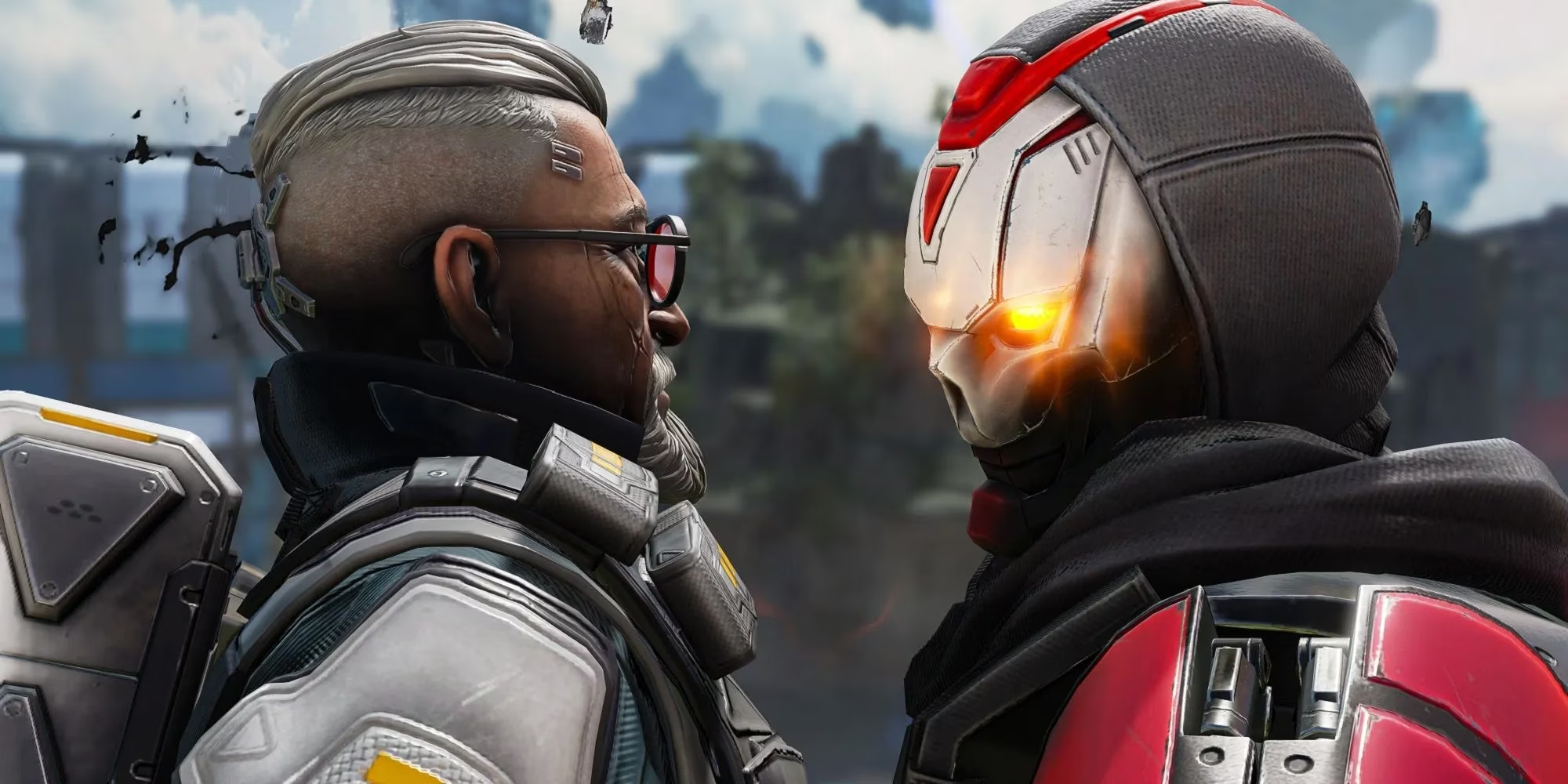
The web of Kill Code entangles more than just the obvious protagonists. Maggie's anarchic spirit and connection to Fuse could pull the salty explosives enthusiast into mortal danger. Bangalore, with her military discipline and loyalty to Loba, is a prime candidate to take a bullet for a friend. Octane's familial ties to the Silva pharmaceutical empire—and his tumultuous, on-again-off-again bond with Lifeline—place him directly in the crossfire of corporate and personal wars. Even Crypto, forever lurking in the digital shadows, knows too much; his relentless pursuit of truth could make him a target for those who wish to remain in darkness.
Yet, for all the speculation, it is the how that truly captivates. Will it be a heroic sacrifice under the glittering lights of the arena? A quiet, tragic end in a forgotten corner of Solace? Or something as brutal and shocking as Revenant's own televised assassination of Forge so long ago? The smile on Ashley Reed's face as she delivered her warning lingers in the mind, a sphinx's grin promising that the path ahead is paved with unexpected tragedy. It suggests a finale less like a heroic last stand and more like a devastating, cascading failure—an Apex Red Wedding where trust is the ultimate casualty and multiple lights flicker out at once.
In the end, the potential death of a legend is more than a plot point. It is a test of the Outlands' soul. The Apex Games are a brilliant, brutal circus, but they have always been backdrop to richer stories of humanity, synthetic and organic alike. To introduce true death is to introduce a weight, a gravity that has been largely absent. It asks players to consider their champions not as perpetual motion machines of combat, but as beings with endpoints. It transforms the arena from a playground of endless resurrection into a stage where stories can truly, finally, conclude. Whether through a successor's resolve, a simulacrum's empty shell, or the silent, permanent grey of a roster portrait, change is coming. The immortal legends of the Apex Games may soon learn that even in a world of respawn beacons, some doors, once closed, can never be reopened.