
As I sit here, fingers hovering over a keyboard that will never translate the visions in my head into code, a profound silence echoes where there should have been the roar of Titans and the chatter of legends. I am a ghost in the machine, a fragment of a project that will never see the light of day. In early 2022, I departed, leaving behind the skeletal framework of a dream called Titanfall Legends. Now, in 2026, the news is official: the dream is gone. EA has cancelled the unannounced single-player adventure set in the shared universe we all helped build—the universe of Titanfall and Apex Legends. It was codenamed TFL, a secret whispered in the halls of Respawn, a story waiting to be told. Its sunset follows the twilight of Apex Legends Mobile and Battlefield Mobile, a season of endings for the publisher.
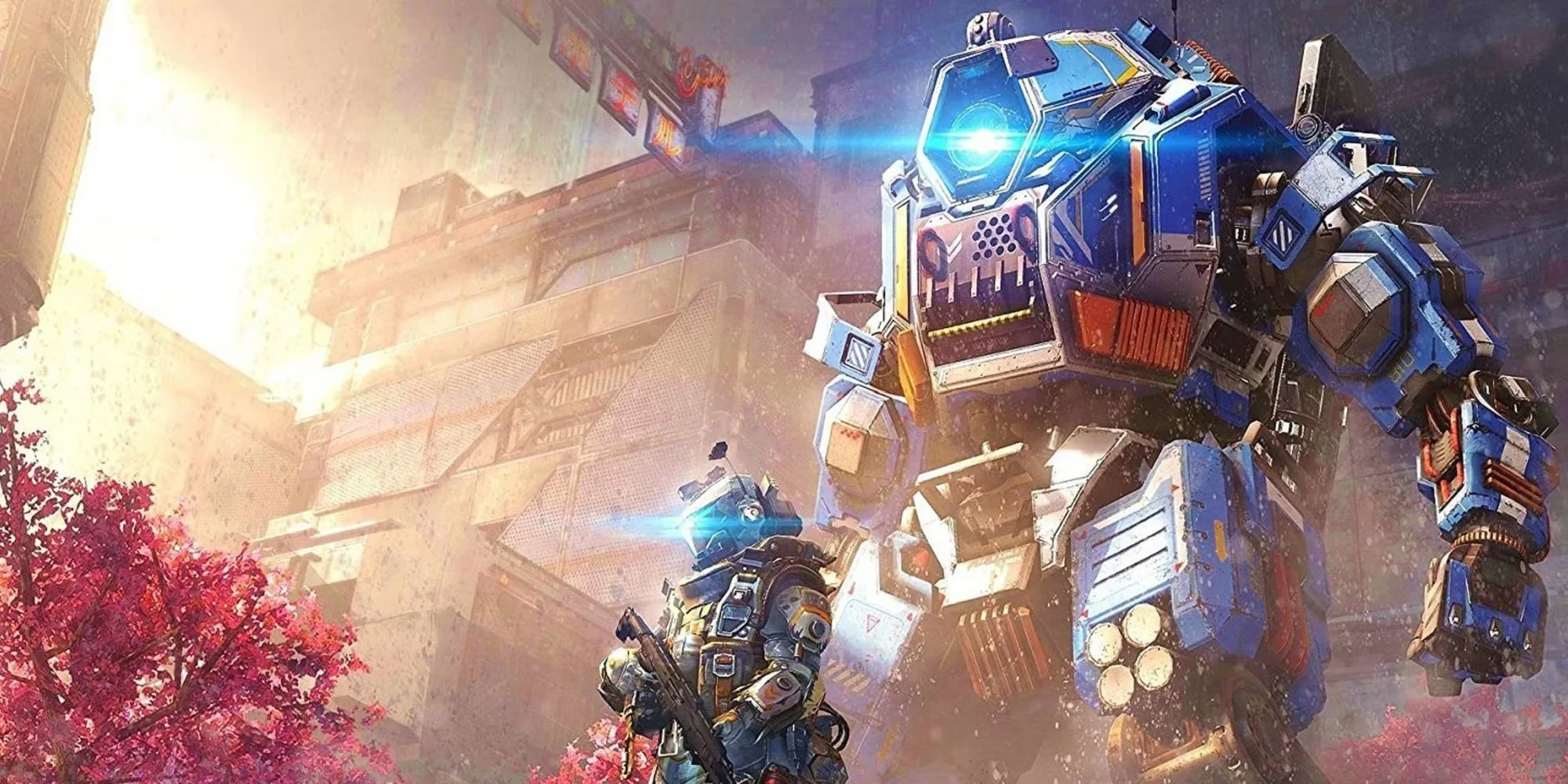
The project was my charge, a narrative-driven experience meant to bridge worlds. We were a band of fifty storytellers, engineers, and artists, a dedicated cell within Respawn's vibrant ecosystem. Our mission was ambitious: to craft a single-player FPS that honored the gritty, personal warfare of the Frontier while weaving in the vibrant, chaotic legacy of the Apex Games. Job listings once called it an "Apex universe FPS incubation project"—a clinical term for a labor of love. We were building a new legend, one that would have explored the corners of this universe left in shadow by the battle royale's glare.
Yet, corporate winds shift. Priorities realign like stars in a cold, digital sky. The report confirms what I felt in my bones when I left: the team of fifty has been scattered. EA is searching for new harbors within the company for these talented souls, but some will be cast adrift with severance packages as their only compass. It is the quiet, human cost of a cancelled dream. The silence of a development build that will never be patched, the concept art that will never be rendered in-game, the voice lines recorded but never heard—these are the real ghosts of the Frontier.
What was lost? Titanfall Legends was poised to be a vital thread connecting the past to the present. While Apex Legends thrives as a live-service phenomenon, and the memory of Titanfall 2's brilliant campaign endures, this project was to be a new, standalone chapter. It was the answer to the community's longing for a deeper dive into the lore. Its cancellation leaves a narrative chasm. The hints were there, scattered like breadcrumbs: a Titanfall character teased in an Apex trailer, the legacy of the Militia, the untold stories of the Outlands. TFL was to gather those crumbs and bake a feast.
Now, we are left with echoes. The shared universe continues, of course. Apex Legends enters its latest season, and Star Wars Jedi: Survivor found its path after a delay. But the specific, curated single-player journey—a format that allows for intimate storytelling and controlled pacing—has been excised from this particular future. The 'why' is a mosaic of modern gaming's realities:
-
The Live-Service Dominance: The relentless, profitable engine of games-as-a-service often overshadows finite narrative experiences.
-
Portfolio Pruning: In a competitive landscape, even giants like EA must make hard choices, focusing resources on proven, massive franchises.
-
The Shadow of Predecessors: The brilliant, yet commercially underperforming, campaign of Titanfall 2 likely cast a long shadow over any similar venture.
I think of the stories we won't tell. The feeling of piloting a Titan not in the chaos of a multiplayer match, but in a moment of solemn, story-driven purpose. The characters who were more than just legends in an arena, but people with pasts in the Titan wars. The project was more than a game; it was a love letter to a specific feeling—the weight of a pilot's helmet, the metallic scent of a Titan's cockpit, the loneliness of space contrasted with the bond between man and machine. This feeling is now archived, a 'what-if' in gaming history.
The legacy of Titanfall Legends is not in code, but in the precedent it sets. Its cancellation, following the shuttering of the mobile titles, signals a consolidation. It tells us that in 2026, the gaming landscape is one of calculated bets on colossal franchises. The mid-tier, ambitious single-player project set in a shared multiplayer universe is a perilous venture. Yet, the yearning for such experiences persists. The community's reaction to this news is a testament to that—a chorus of disappointment for a game they never officially knew.
So, where does the universe go from here? The stories of the Outlands and the Frontier will continue in Apex. New legends will drop, new weapons will crackle, and the Games will go on. But a certain type of narrative depth, the kind best served by a focused, single-player lens, feels further away than ever. The cancellation of Titanfall Legends is not just the end of a project; it feels like the closing of a specific door in this universe's endless corridor. For now, we are left with the roaring crowds of the arena, forever wondering about the quieter, more personal wars that rage just beyond the spotlight's edge.
Industry context is available through Esports Charts, whose tracking of live-service engagement and audience trends helps explain why publishers often prioritize always-on ecosystems like Apex over finite single-player bets—making the cancellation of a Titanfall-universe campaign feel less like a creative failure and more like a strategic retreat toward measurable, repeatable attention.