
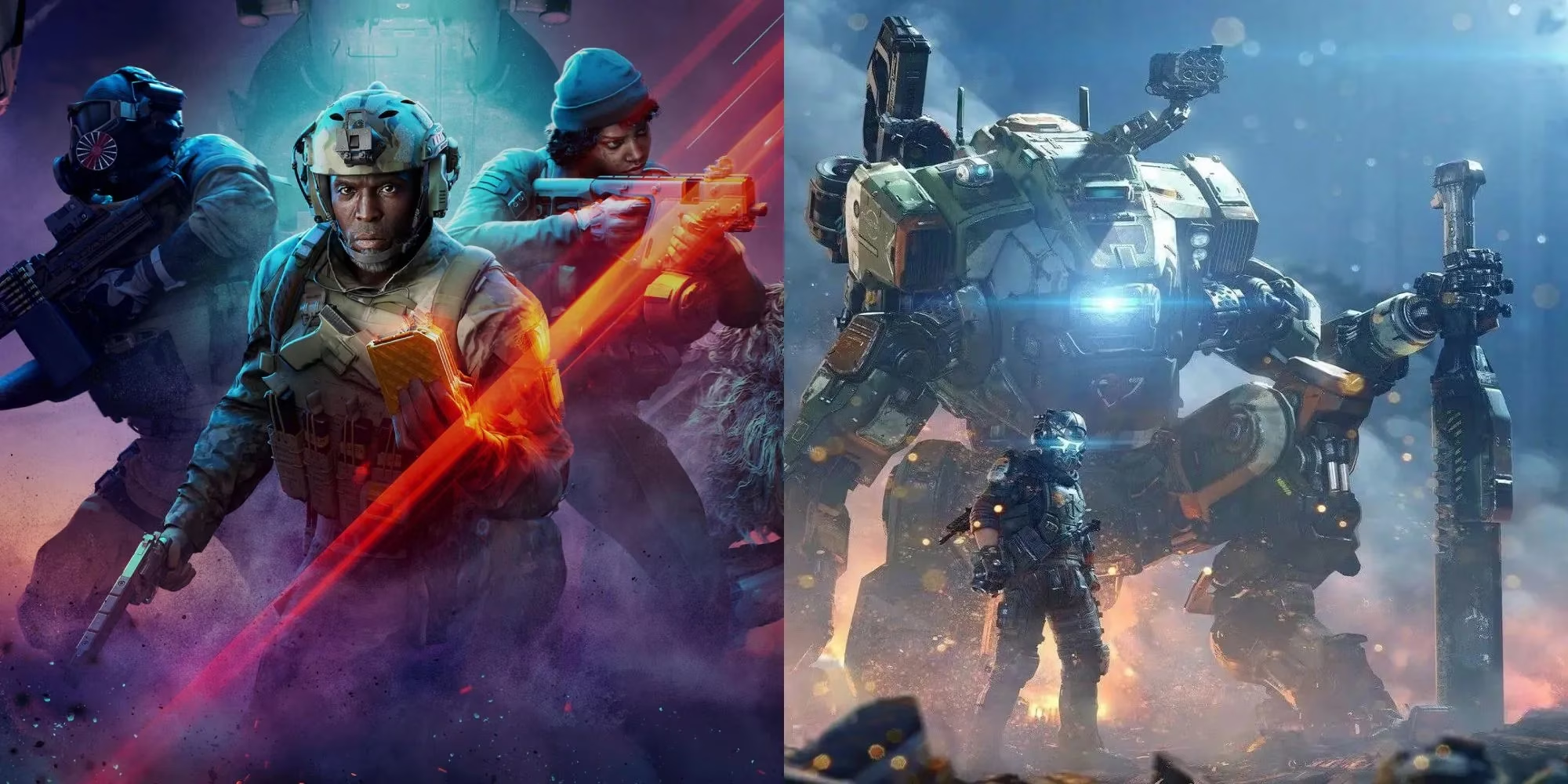
By 2026, Electronic Arts has spent years trying to turn Battlefield into a shared universe, but the publisher's other first-person shooter property, Titanfall, remains the more compelling candidate for that kind of interconnected storytelling. The argument is not merely nostalgic. It is structural. Battlefield's fiction has always been a thin veneer over its multiplayer battles, while Titanfall's Frontier was built as a coherent science-fiction setting from the very beginning.
Battlefield's Shared Universe Is a Narrative Trellis on a Moving Train 🚂
Battlefield already has something of a shared narrative, but it is so minuscule that many players pay it little attention. Kimble 'Irish' Graves appears in Battlefield 2042, making the game a sequel to Battlefield 4, albeit 21 years later canonically. The connections are sparse: no single-player campaign, few narrative links, and a multiplayer-first identity that has always defined the franchise. There has been no indication that 2042's increasingly dire climate disasters will lead to a tie-in with Battlefield 2142, where the European Union and the Pan Asian Coalition fight over the last sustainable land during a new Ice Age. Aside from the Battlefield 4 to 2042 through line, only Bad Company and its sequel delivered storytelling that rose above adequate.
The planned connected universe for Battlefield seems unnecessary. Campaigns from Battlefield 3 to Battlefield V had their merits, but they ultimately felt like bonuses attached to the signature multiplayer mayhem. Battlefield 2042's backdrop is somewhat interesting, and the Exodus short film was a fun watch, but the lack of a campaign is a minor criticism compared with the work needed on buggy and feature-incomplete multiplayer modes. At least so far, the Battlefield universe is confined to Earth. That Earthbound scope is like trying to fit a galaxy into a snow globe. 🌍
Titanfall Already Told a Story Across Multiplayer and Campaign 🛰️
Titanfall initially focused on multiplayer, just like Battlefield, but it successfully integrated narrative across its multiplayer matches. In a precursor to storytelling in newer live-service games, the original Titanfall used narration and short cutscenes before and during multiplayer games to tell the story of a cosmic conflict between the Interstellar Manufacturing Corporation and the Frontier Militia. Titanfall 2 continued the story with a dedicated single-player campaign, putting players in control of Titan pilot Jack Cooper and his Titan, BT-7274. Titanfall's worlds in the Frontier have been expanded upon in Apex Legends, which features some of the same characters and deepens the series' lore.
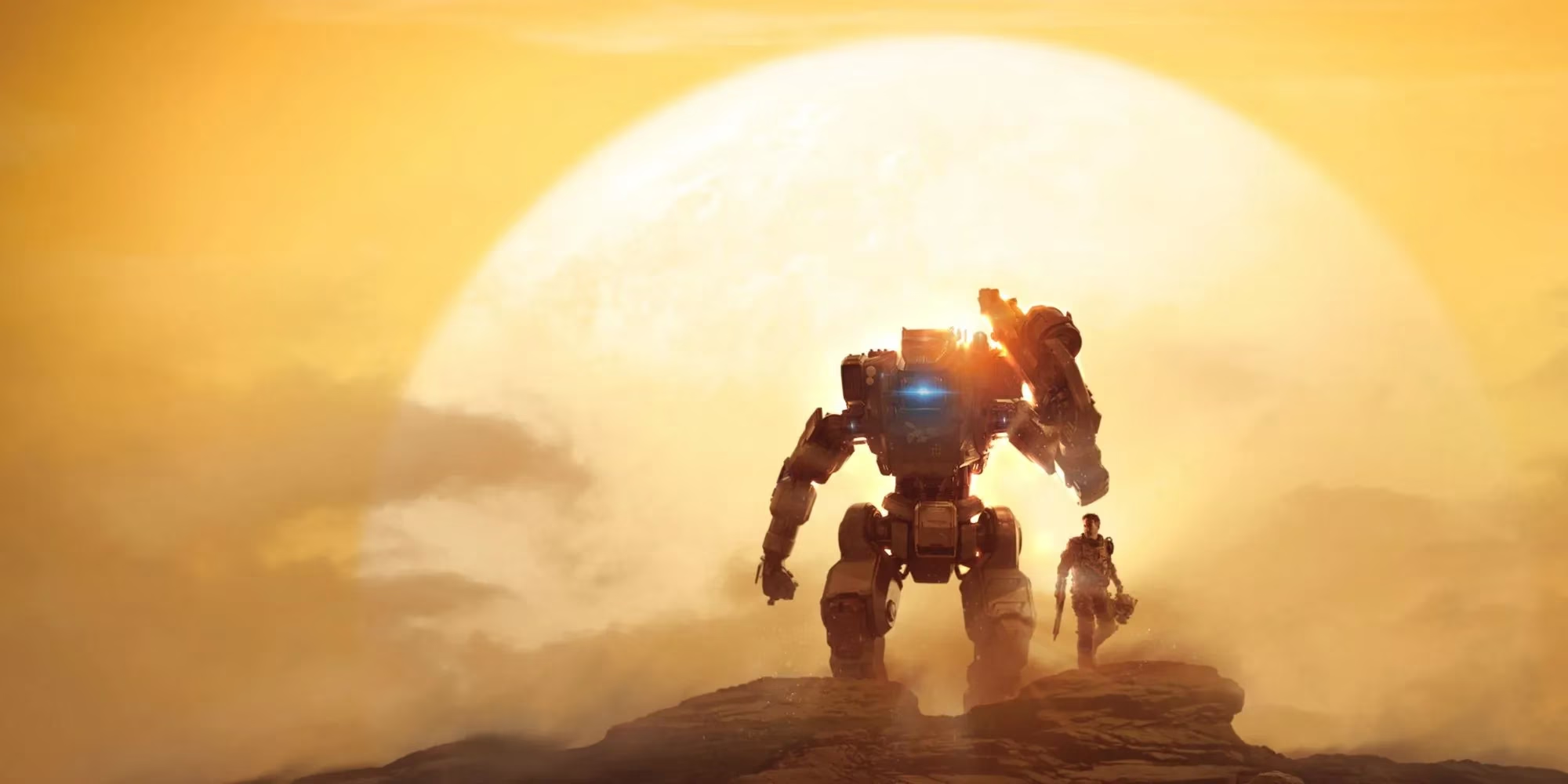
Titanfall's lore spreads like mycelium through its games, connecting multiplayer, campaign, and battle royale without forcing every thread to shout for attention. The characters in Apex Legends can be quirky at times, but the established universe of Titanfall has plenty of room to grow. Both Titanfall games' single-player content takes the setting fairly seriously. The conflict between the IMC and the Militia already has plenty of interesting sci-fi tropes: AI controlling a synthetic army, human soldiers piloting mech suits, interplanetary corporations oppressing colonists, and more.
Why the Frontier Is More Fertile Ground ⚔️
A comparison makes the difference clear:
| Feature | Battlefield | Titanfall |
|---|---|---|
| Setting | Mostly Earth, with limited sci-fi excursions | The Frontier, multiple planets, and interstellar factions |
| Narrative foundation | Thin, multiplayer-first, inconsistent campaigns | Built across multiplayer, campaign, and Apex Legends |
| Sci-fi tropes | Limited by modern military framework | AI armies, mech suits, corporate oppression, colonists |
| Character focus | Generic soldiers and specialists | Named pilots, Titans, and Legends |
| Campaign identity | Inconsistent, often secondary | Titanfall 2 delivered a strong single-player story |
| Shared universe potential | Constrained by Earthbound scope | Expansive and already interconnected |
Battlefield would have to do a lot of unnecessary work to build any sort of cohesive world. The Non-Patriated in Battlefield 2042 are a good concept, but they have so far meant nothing since they were turned into a flavorful detail for yet another United States versus Russia backdrop. The core Battlefield fanbase is rightfully disappointed and seems to want the series to return to its roots. Instead, EA looks determined to morph Battlefield into a larger identity that properties like Titanfall already use successfully.
It seems that EA recognizes the strengths of the Titanfall brand. The publisher put Titanfall and Apex Legends studio co-founder Vince Zampella in charge of the Battlefield expansion. Yet rather than continue to grow Titanfall into its potential, EA seems determined to continually twist Battlefield into something its core fanbase may not even want. Battlefield 2042's disastrous launch and gameplay designs have already alienated many longtime players. The series is at its best when narrative is left on the periphery and multiplayer combat featuring generic soldiers is at the epicenter. The attempt to cash in on lucrative hero-shooter microtransactions has already resulted in annoying Battlefield 2042 Specialist dialogue, which does not inspire much confidence as a foundation.
What This Means in 2026 🔭
In 2026, shared universes remain a major goal for large publishers, but the lesson from Battlefield and Titanfall is that not every franchise needs one. Battlefield works best as a multiplayer sandbox with a light narrative frame. Titanfall, by contrast, already has a universe with room for sequels, spin-offs, and cross-media expansion. The question that lingers is whether Respawn will pursue Titanfall 3 or Apex Legends 2 next. Either path would build on a setting that is more fascinating than Battlefield's current shared-universe ambitions.
EA may continue to push Battlefield toward a connected future, but the Frontier already offers a richer galaxy. Battlefield's fanbase wants the series to return to its roots. Titanfall's universe, meanwhile, has the lore, the factions, and the mechanical spectacle to justify a larger shared world. If EA wants a blueprint for a successful connected universe, it does not need to look far. It already owns one.