
Dropping into Kings Canyon or the neon-lit streets of E-District, every Apex Legends player faces that split-second choice at the character select screen. It’s a decision that feels as personal as selecting a favorite song before a workout—except here, the rhythm is gunfire and the melody is squad chemistry. In 2026, with over thirty Legends now in the roster and the meta shifting like dunes in a desert storm, the question of why someone clicks on one Legend over another has never been more layered. From the way a tactical ability sings in close quarters to the quiet tug of a backstory, the reasons are rarely just about winning.
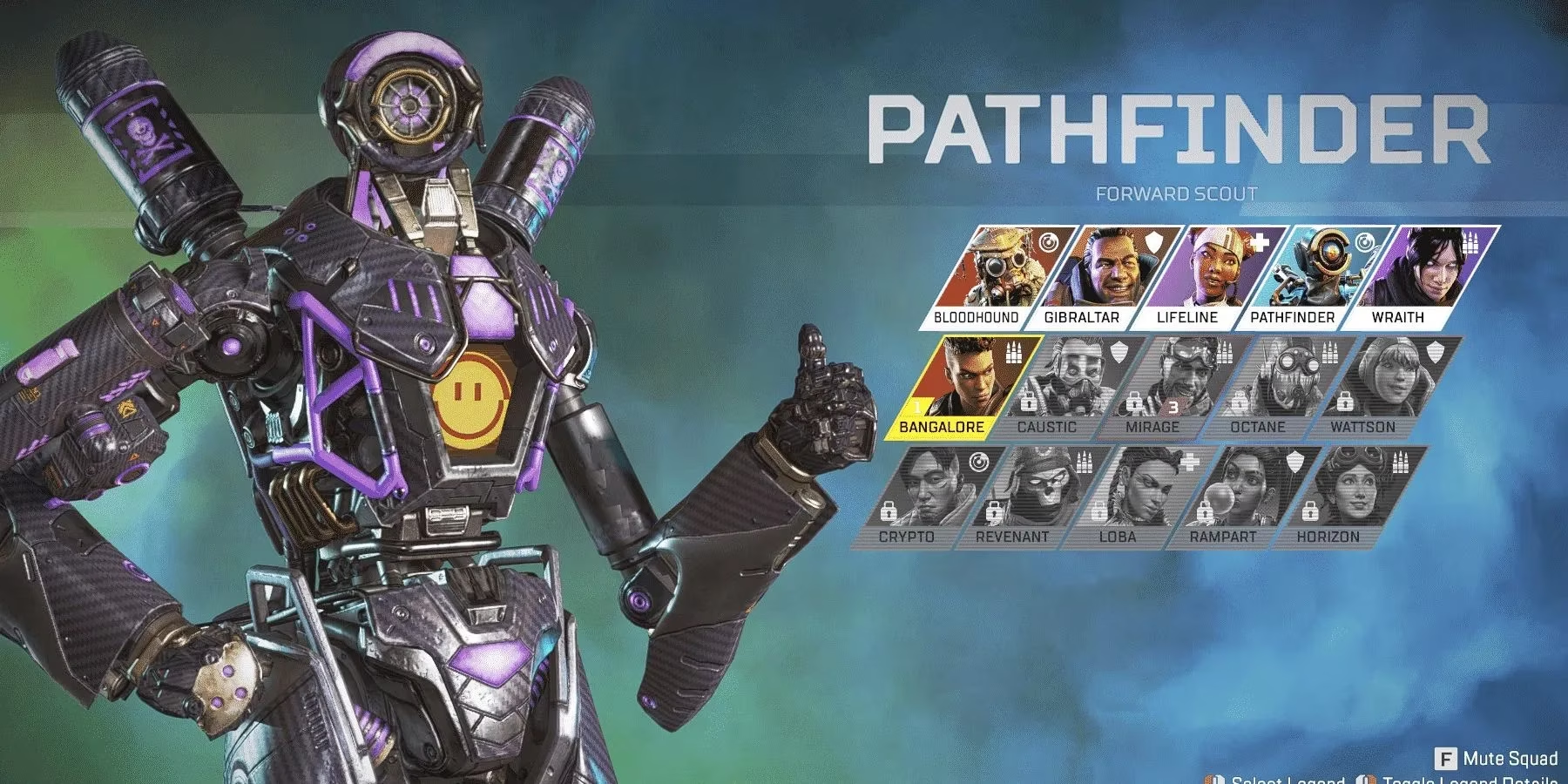
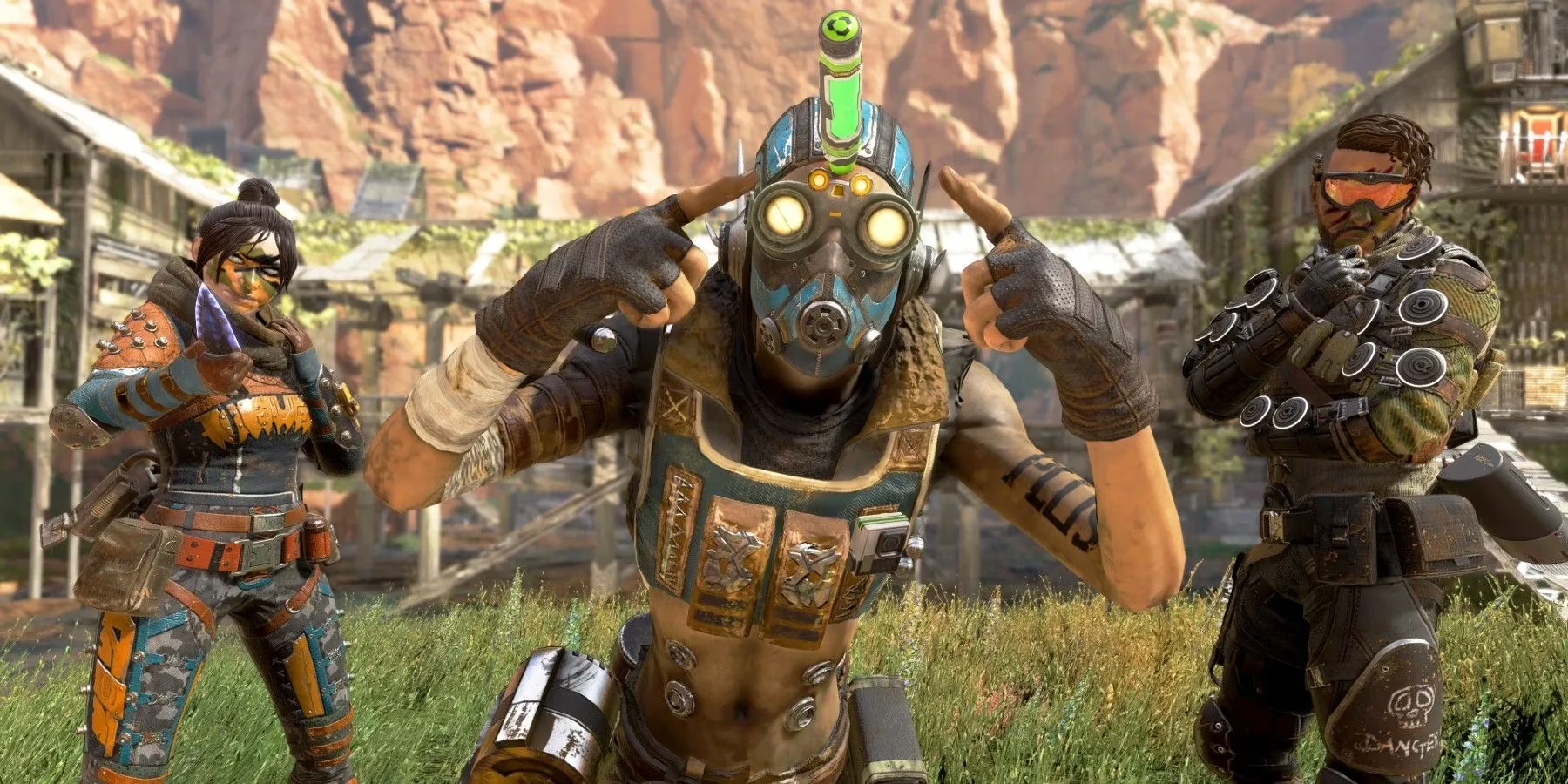
At the heart of every Legend lies their three abilities—passive, tactical, and ultimate—which function like the distinct sections of an orchestra. A passive is the steady bassline, always thrumming beneath the action. The tactical is a burst of percussion, a quick, decisive beat that can stun an enemy or save a teammate. Then the ultimate is the soaring violin solo, the moment the spotlight narrows and a player can shape the entire fight. Consider how a veteran Wraith uses Into the Void to phase out of danger, slipping away like smoke through a keyhole, or how a new Legend like Kestrel—a supposed recon expert introduced in Season 26—uses her Echo Latch tactical to tether to walls, turning every arena into a jungle gym. These abilities aren’t just tools; they’re an extension of a player’s instinct. Someone who thrives on chaos will gravitate toward Octane’s Stim, chasing the razor’s edge of speed, while a methodical thinker might favor Catalyst’s ferrofluid barricades, painting the battlefield with control as deliberately as a calligrapher’s brush.
Yet abilities alone don’t tell the whole story. The meta—that ever-circling vulture of balance patches and pro trends—nudges pick rates like an invisible hand. Respawn’s live-service rhythm means what dominated last season can become a footnote by the next. Three years ago, Gibraltar was an unshakeable fortress; his Dome of Protection and Gun Shield combo made him a staple in ranked lobbies. In 2026, the fortress has crumbled into a more nuanced landscape. Seer’s recent rework shifted him from a wall-hack menace to a precision interrupter, and the arrival of Flux, a support Legend who can temporarily overcharge teammates’ shields, has spun a new web of synergies. Now you’ll see a Flux using her Shield Surge ultimate right before a Valkyrie squad redeploys, giving the team a safety net that feels almost like an exosuit of pure energy. The meta is a tide pool—players dip their toes into the strongest, most synergistic combos because losing stings, and adapting is survival. But treating meta as gospel can be a trap; a devoted Mirage main can still bamboozle a lobby full of Fuse and Horizon pickers simply because the player has turned deception into an art form.
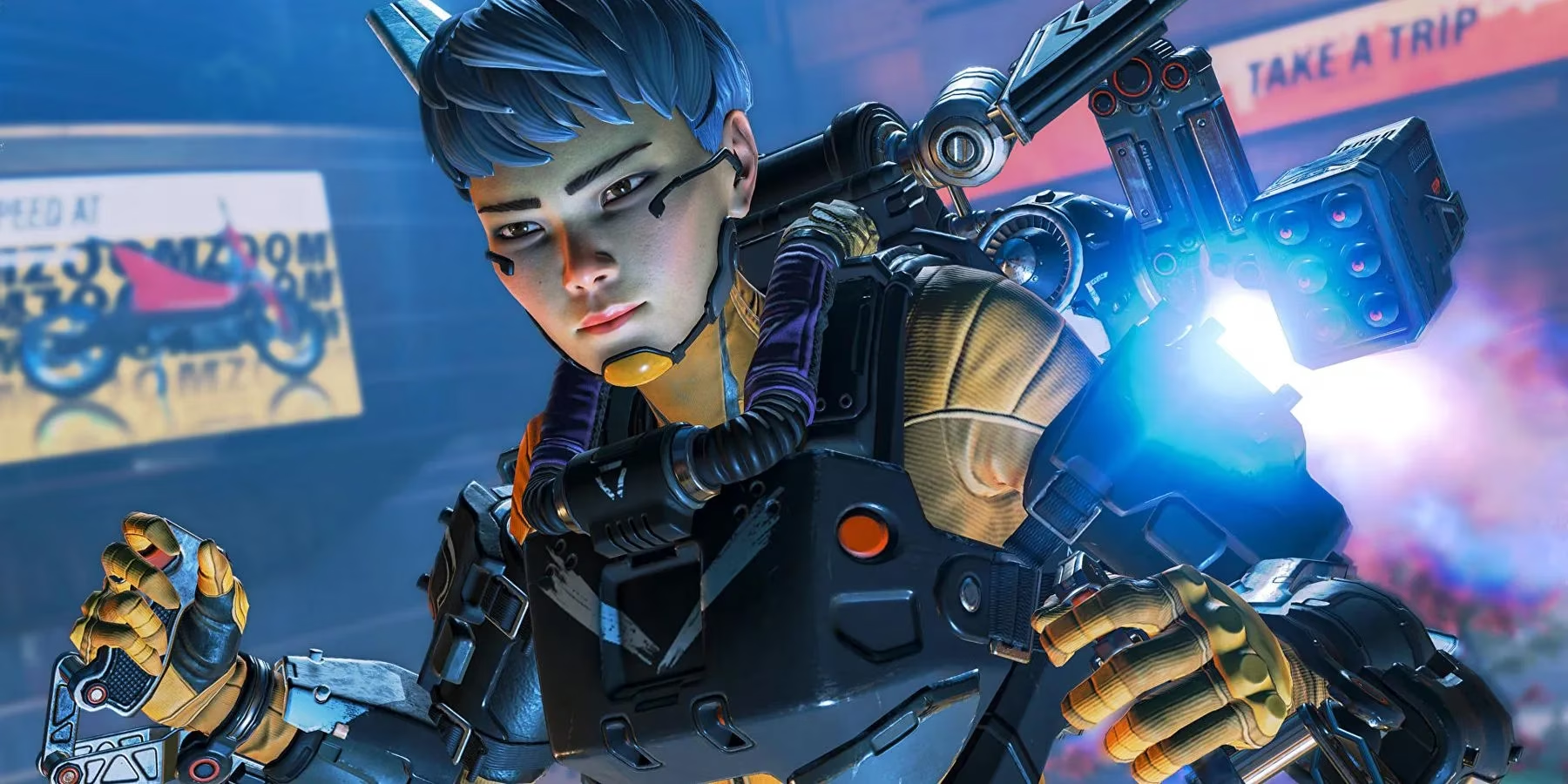
Then there’s the irresistible pull of personality and appearance. Before a single bullet flies, a Legend’s visual design acts as a handshake. It’s the reason fashion-forward players sink Crafting Metals into legendary skins, and why a Legend’s default look must hook the eye like the cover of a worn novel. Mirage, for example, struts onto the selection screen with the smirk of a man who believes mirrors were invented just for him. His quips are a deluge of self-praise, yet that bravado is a delicate porcelain mask—crack it, and underneath is a man who lost all three brothers in a transport crash, who visits a mother fading into dementia. The narrative team at Respawn has only deepened this approach; recent Legends like Riven, a stoic ex-I.M.C. pilot, carry journals of battlefield guilt that unlock through play, turning the Apex Games into a stage for quiet character studies. Personality is the spice that seasons the gameplay stew. A player might initially pick Valkyrie because her jetpack looks cool, but they stay because her brash yet loyal dialogue makes them feel like they’re flying with a friend who’s always got a sarcastic remark ready.
Backstory, then, becomes the anchor. In a live-service world where the narrative evolves through seasonal quests and animated shorts, the lore gives players a reason to care beyond the kill feed. It’s the difference between playing a character and inhabiting a person. When a player learns that Octane’s obsession with speed stems from a desperate need to outrun the boredom that nearly destroyed him, the stim injections feel less like a mechanic and more like a confession. The developers have turned these Legends into a mosaic of trauma, hope, and humor, and by 2026, the cumulative lore is a library of short stories that rivals many single-player titles. This emotional investment can override raw statistical strength—a player might main Wattson not because her fences are top-tier, but because her unwavering optimism in the face of loss feels like a warm blanket in a storm.
So when a player hovers over a Legend in 2026, they’re weighing a cocktail of ingredients: the tactile joy of a perfectly placed tactical, the cold mathematics of the meta, the visual identity that makes them feel seen, and the narrative threads that turn polygons into personalities. It’s a dance between the head and the heart. In a game that continues to thrive by reinventing itself, the true beauty is that there is no wrong choice—only the Legend that makes you feel like the champion you’re about to become.